
Kingflex
Foam insulation tape can look simple: a narrow roll, a peel-off liner, and a quick press along a seam. Yet the right choice can help reduce drafts, cushion vibration, and close small gaps around panels, ducts, or equipment. Insulation Tape Foam comes in different thicknesses, densities, and adhesive types, so a product that works on clean metal may not bond well to dusty wood or rough masonry. Fit matters. Surface preparation matters too.
Building-science expert Joseph Lstiburek is known for emphasizing how air and moisture control depend on the whole building assembly. A relevant paraphrase of that principle is: “Tape supports a sound assembly; it cannot fix a poor one.” That distinction is easy to forget when a roll promises a fast repair. Before buying, check the surface, temperature range, exposure conditions, and the gap you need to seal. Press a short test strip into place and inspect its bond after the manufacturer’s recommended setting time. Small tests can prevent wasted material.
This guide looks at where foam tape helps, what its limits are, and how to compare products for a specific project. A foam strip may compress neatly beneath a panel edge, but too much compression can weaken the seal. And adhesive is not a substitute for proper fastening or compatible materials. Real projects are rarely perfect; an uneven edge or missed patch can change the result. Choose carefully, then verify the seal.
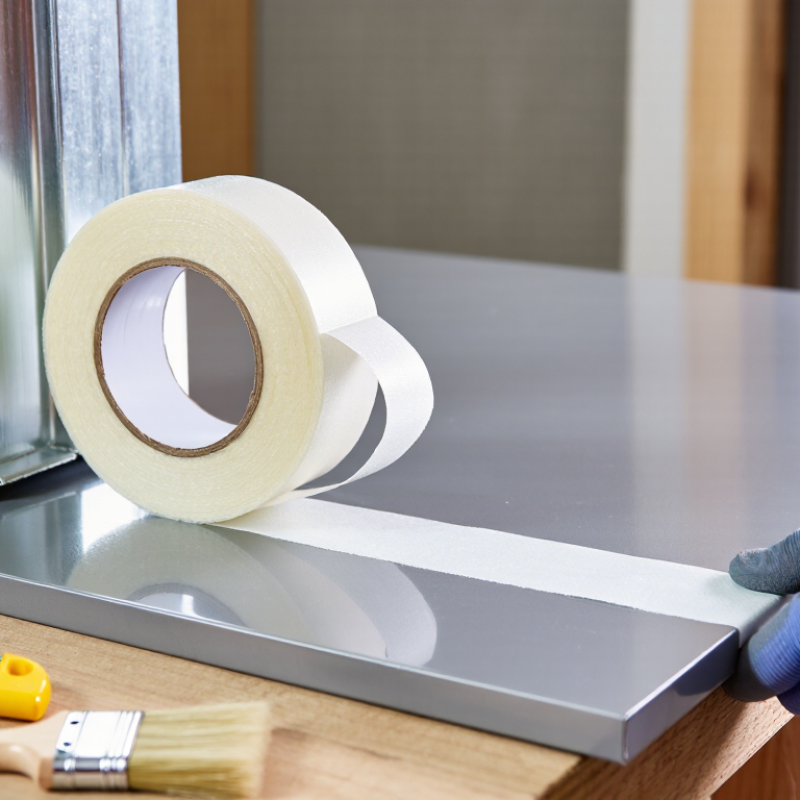
Foam insulation tape is a compressible strip of cellular material used to fill narrow gaps and reduce heat transfer, vibration, or air movement. Its core may be made from polyethylene, polyurethane, or another foam chosen for flexibility, temperature range, and exposure conditions. During manufacture, polymer ingredients are mixed and expanded with gas or a blowing agent, then shaped and cured into sheets or rolls. After cooling, converters slit the foam to the required width and laminate adhesive to one face. It is not simply soft foam with glue. Small details matter.
The adhesive is usually pressure-sensitive, so it bonds when pressed against a clean surface rather than needing heat to activate it. A release liner protects the sticky layer during storage and is peeled away during installation. Thickness, density, and cell structure affect how well the tape compresses and recovers. For example, a slightly uneven metal panel may need a softer foam that conforms without leaving open channels. Yet no tape fixes poor surface preparation; dust, oil, or moisture can weaken the bond. Fit is rarely perfect. Installers should check the product’s temperature limits and test a short section when the substrate or conditions are unfamiliar.
Foam insulation tape helps reduce heat, air, and moisture movement through small joints. It compresses against uneven edges, creating a closer seal around window frames, access panels, and duct connections. In cold weather, that seal can limit drafts and reduce heat escaping through gaps. In warm weather, it can slow hot outdoor air from entering cooled spaces. Small gaps matter.
Many foam tapes use flexible, closed-cell material, but performance varies by thickness, density, and adhesive. A strip pressed over dust or dampness may lift early. Clean and dry the surface, then apply steady pressure along the full seam. Avoid stretching the tape; it may pull back later. That detail is easy to miss.
By limiting humid air leakage, foam tape can also reduce moisture reaching cooler surfaces where condensation may form. It is not a waterproofing system, and it cannot fix leaks or poor drainage. I would treat it as one part of a careful insulation detail, not a cure-all. Check that the tape suits the surface and temperature range, and inspect corners where gaps often remain. A neat-looking seal can still be incomplete.
| Foam Tape Type | Typical Structure | Heat Transfer | Air Leakage | Moisture Exposure | Common Applications |
|---|---|---|---|---|---|
| Closed-cell polyethylene (PE) | Lightweight foam with mostly sealed cells | Helps slow heat transfer through narrow gaps | Can reduce drafts when correctly sized and compressed | Absorbs relatively little water, but seams and edges still need protection | Cabinet and panel gaps, general weatherstripping, packaging, and light-duty sealing |
| Closed-cell EPDM rubber | Flexible, resilient closed-cell rubber foam | Provides a compressible insulating barrier at joints | Useful for sealing uneven gaps when the tape maintains contact | Often selected for outdoor exposure; performance depends on the specific product and installation | Doors, windows, enclosures, and equipment panels |
| Open-cell polyurethane (PU) | Soft foam with interconnected cells | Can provide cushioning and some thermal resistance | May seal gaps when compressed, but is generally less suited to demanding air barriers | Can take up more moisture than closed-cell foam; protect it where wetting is possible | Indoor cushioning, light-duty gasketing, and applications where softness is important |
| Closed-cell neoprene | Flexible closed-cell synthetic rubber foam | Helps limit heat transfer at contact points and joints | Can create a gasket-like seal under suitable compression | Commonly used where resistance to weathering or splashes is needed; not automatically a waterproof assembly | Equipment housings, access panels, and general-purpose gaskets |
| Adhesive-backed foam weatherstrip | Foam strip supplied with a pressure-sensitive adhesive | Reduces heat exchange associated with unsealed gaps | Helps reduce drafts around movable or fixed joints when the surface is clean and the fit is correct | Choose a product rated for the location; water can enter through joints or poorly sealed edges | Window sashes, door stops, hatches, and service-panel edges |
| Performance depends on foam density, thickness, cell structure, adhesive, gap size, compression, surface preparation, and exposure conditions. Foam tape is a gap-sealing aid, not a substitute for a complete building air, vapor, or waterproofing system where one is required. Check the product data sheet for application limits and compatibility. | |||||
Foam insulation tape helps close narrow gaps where air, dust, or moisture may pass around panels, ducts, and window frames. Its compressible backing can adapt to small surface irregularities, while the adhesive holds it in place on a clean, dry surface. Small gaps matter. A strip around a metal access panel, for example, can reduce drafts and limit rattling when the panel closes. The foam also slows heat transfer across the covered seam, though it will not insulate an entire wall or replace properly specified building insulation.
Good results depend on choosing the right thickness, width, and foam type for the joint. Measure the gap before installation; tape that is too thin may leave openings, while overly thick tape can prevent a panel from seating. Press it firmly along the seam, especially at corners, where small breaks are easy to miss. Surface preparation makes a difference. Dust, oil, and cold conditions can weaken adhesion, so check the product instructions for compatible surfaces and temperature limits. Foam tape is not automatically suitable for fire-rated assemblies or prolonged water exposure. It is easy to overestimate what one roll can fix; inspect the joint after fitting, and use a more suitable sealing method if the gap moves or stays wet.
Indicative thermal conductivity of common foam materials
Lower thermal conductivity means less heat transfer through the material. Foam tape can also compress to help seal gaps and irregular surfaces. Values shown are typical material-level estimates; actual performance varies with formulation, density, thickness, and temperature.
Foam insulation tape is useful where two surfaces meet and a narrow gap lets heat, air, dust, or vibration pass through. On window frames, it can cushion a sash and reduce drafts when the window closes. Around access panels, it helps create a snug contact without making removal difficult. These small applications are common in home repairs, workshops, and equipment enclosures.
Material matters. On clean metal ductwork, foam tape can seal panel joints and soften rattling caused by vibration. On wood, it may cushion trim or help close uneven edges, though rough grain can weaken adhesion. Plastic and painted surfaces also vary: some coatings release easily, while others bond well after cleaning and drying. Small details matter. Test a sample first.
For outdoor projects, choose tape rated for the expected moisture, temperature, and sunlight; indoor foam may harden or lose adhesion outside. Press the tape firmly, but avoid crushing it beyond its intended range, since over-compression can reduce its ability to recover and seal. Dust, oil, and damp surfaces are frequent causes of failure. Foam tape is not a substitute for a specified fire-rated seal or a properly designed insulation system, and a slightly imperfect fit may still need another solution.
Choosing foam insulation tape starts with measuring the gap, not guessing from a product photo. Measure at several points; older frames are rarely even. Match the tape’s thickness to the compressed gap. If it is too thick, a door may not latch. Too thin, and air can still pass through. Check the surface material, expected temperature range, moisture exposure, and whether the tape must flex repeatedly. Adhesive compatibility is easy to overlook. Dusty, oily, or uneven surfaces can weaken the bond, even when the foam itself seems suitable.
Foam tape can help seal small leaks, but it is not a substitute for repairing damaged frames or insulating a whole wall. The U.S. Department of Energy’s Energy Saver guidance estimates that windows account for 25–30% of residential heating and cooling energy use. That figure describes windows overall, not savings from tape.
For material selection, ASTM D1056 covers flexible cellular materials; ASTM C534 applies to flexible elastomeric cellular insulation, not every adhesive foam tape. Check the product data sheet for test conditions and service limits. There is no universal best option. Fit matters. A small trial section can reveal poor adhesion or compression problems before you tape the entire frame.
It is a compressible foam strip with adhesive on one side. It helps seal narrow gaps and reduce drafts, vibration, or heat transfer.
Foam material is expanded, shaped, and cured into sheets or rolls. The foam is then cut to size and laminated with adhesive.
It protects the adhesive during storage. Peel it away before pressing the tape onto a clean surface.
It can seal access panels, window frames, duct joints, and equipment enclosures. A strip may also reduce rattling when a metal panel closes.
Measure the gap first. Tape that is too thin may leave openings, while overly thick tape can stop a panel from seating.
Clean, dry metal, wood, plastic, and painted surfaces may work. Test a short piece first; coatings and rough grain can affect adhesion.
Only use foam rated for the expected moisture, sunlight, and temperature. Indoor tape may harden or lose adhesion outside.
No. It can help seal a narrow seam, but it does not insulate a whole wall or replace specified fire-rated materials.
Dust, oil, moisture, cold conditions, or excessive compression can weaken its seal. Small gaps are easy to miss, so inspect the joint after fitting.
Not always. A moving or persistently wet gap may need a different sealing method. Foam tape has limits.
Foam insulation tape is made from flexible cellular materials coated with pressure-sensitive adhesive, creating a simple solution for sealing gaps and insulating surfaces. Its foam structure helps slow heat transfer, while a compressed fit around joints can limit drafts and reduce the passage of moisture and noise. This combination makes it useful for improving comfort and helping protect materials from everyday temperature changes and condensation.
Insulation Tape Foam can be used on windows, doors, ducts, panels, pipes, and equipment made from compatible materials. Its advantages include flexibility, easy application, cushioning, and the ability to conform to uneven spaces. To choose the right tape, consider the gap size, surface type, temperature and moisture conditions, required thickness, and adhesive strength. Preparing a clean, dry surface and selecting tape suited to the project helps create a more durable seal.
