 Kingflex
Kingflex
Kingflex
Engineered to deliver exceptional thermal resistance, moisture barrier properties, and acoustical control across critical sectors.
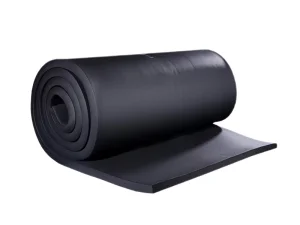
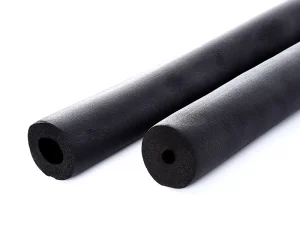
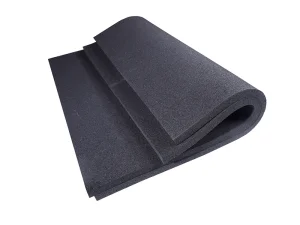
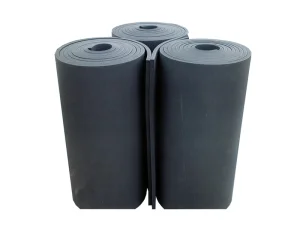
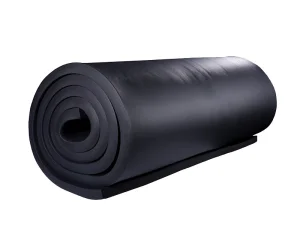
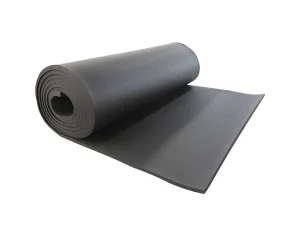
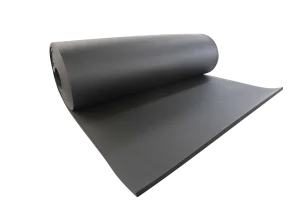
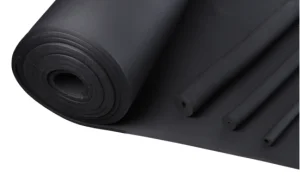
In today's heavy industries and modern commercial architectures, energy conservation, thermal control, and structural sustainability are major challenges. Globally, elastomeric rubber foam insulation (primarily based on NBR/PVC blends) has become a key technology for thermal and acoustic isolation. With excellent thermal resistance ($\lambda \leq 0.034$ W/m·K at 0°C) and water vapor barrier capabilities ($\mu \geq 10,000$), it is widely used in HVAC systems, process piping, cold chain infrastructure, and acoustic panels.
As international building codes mandate stricter fire ratings (such as BS 476 Class 0, ASTM E84, and UL 94) and strict environment directives (REACH and RoHS), engineers are looking for manufacturers who can combine high volume production with precise chemistry. Kingflex Insulation Co., Ltd. addresses this need by supplying top-tier thermal and cold-retardant structures to dynamic markets globally.
Why elastomeric rubber foam consistently outperforms fibrous alternatives in complex and high-moisture environments.
Unlike fiberglass or mineral wool, which rely on external vapor barriers, NBR/PVC rubber foam has a closed-cell rate exceeding 98%. This creates a continuous moisture barrier, protecting pipelines from Corrosion Under Insulation (CUI) and preventing moisture from degrading the system's thermal efficiency over time.
Safety is a priority in chemical and high-occupancy structures. Our elastomeric foam is formulated with advanced fire-retardant additives. It is self-extinguishing and complies with BS 476 (Class 0 and Class 1), UL 94 V-0, and international building safety codes.
With compression resilience exceeding 80%, Kingflex rubber foam returns to its original shape after mechanical pressure. This resilience maintains consistent insulation thickness at bends, joints, and support brackets, avoiding localized thermal bridging.
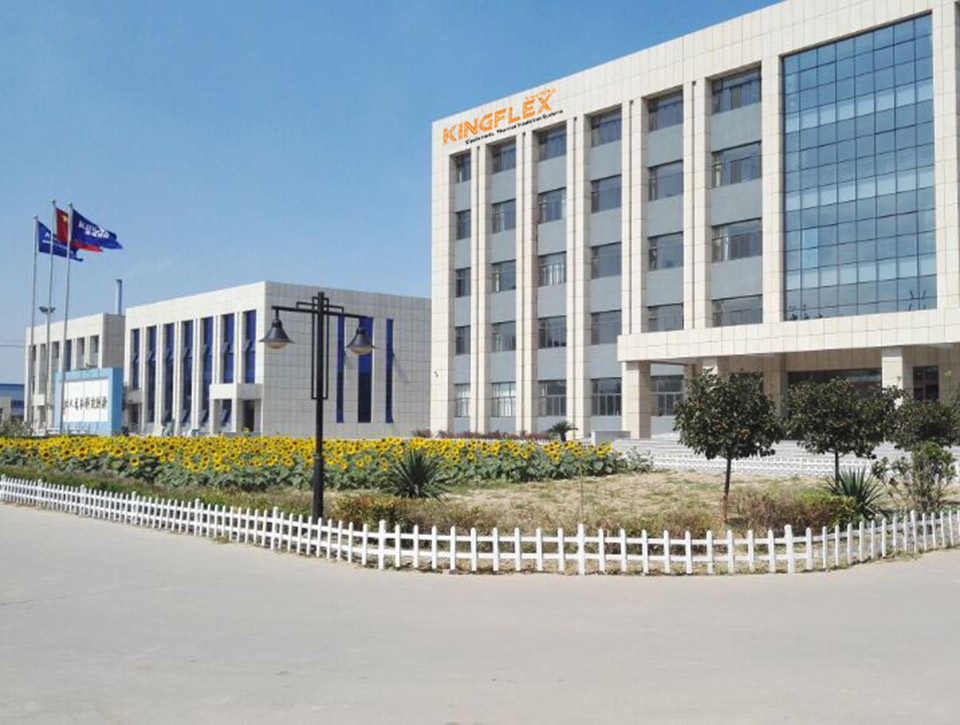
Located in Dacheng, China—the well-known capital of green building materials—our research and production facilities benefit from a highly developed industrial cluster. This ecosystem guarantees rapid access to top-grade NBR and PVC raw polymers, lowering transit costs and increasing manufacturing speeds.
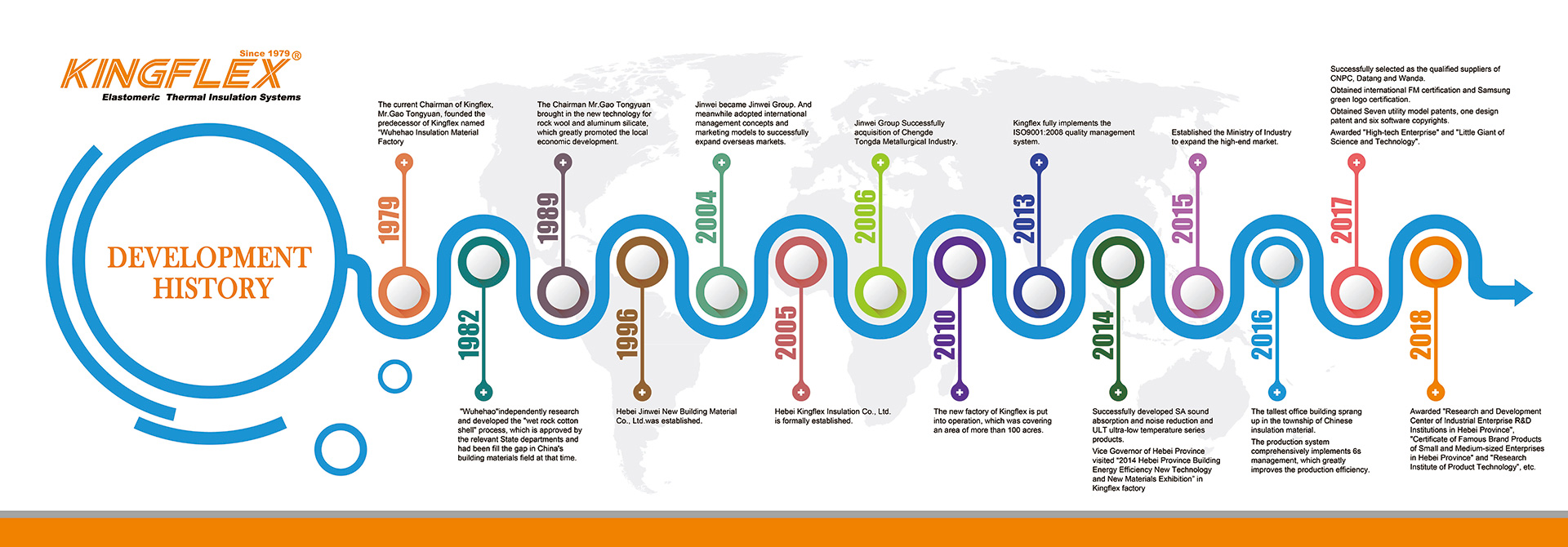
Established by the Jinwei Group, which has more than 40 years of history (founded in 1979 as the first manufacturer of thermal insulation materials north of the Yangtze River), Kingflex has grown to lead the industry. Today, we operate 5 high-speed automatic assembly lines with an annual capacity exceeding 600,000 cubic meters.
Annual Production Volume
Proven Industry Heritage
Global Export Network
Detailed performance benchmarks of Kingflex NBR/PVC Rubber Foam insulation products compared to standard market materials.
| Performance Parameter | Kingflex NBR/PVC Rubber Foam | Mineral Rock Wool | Traditional Fiberglass |
|---|---|---|---|
| Thermal Conductivity (at 0°C) | $\leq 0.034$ W/(m·K) | $\approx 0.038$ - $0.044$ W/(m·K) | $\approx 0.036$ - $0.040$ W/(m·K) |
| Water Vapor Resistance ($\mu$) | $\geq 10,000$ (Built-in Vapor Barrier) | $\approx 1$ (Requires external foil) | $\approx 1.2$ (Requires external foil) |
| Service Temperature Range | -40℃ to +105℃ (Up to -196℃ for Cryogenic) | Room Temp to +650℃ | -18℃ to +230℃ |
| Closed-Cell Content | > 98% | Open structure (Fibrous) | Open structure (Fibrous) |
| Fire Safety Rating | Class 0 (BS 476), Class V-0 (UL94) | Class A1 (Non-combustible) | Class A2 (Non-combustible) |
| Risk of Corrosion (CUI) | Extremely Low (Closed cells block moisture) | High (Retains moisture near steel) | High (Permeable to ambient humidity) |
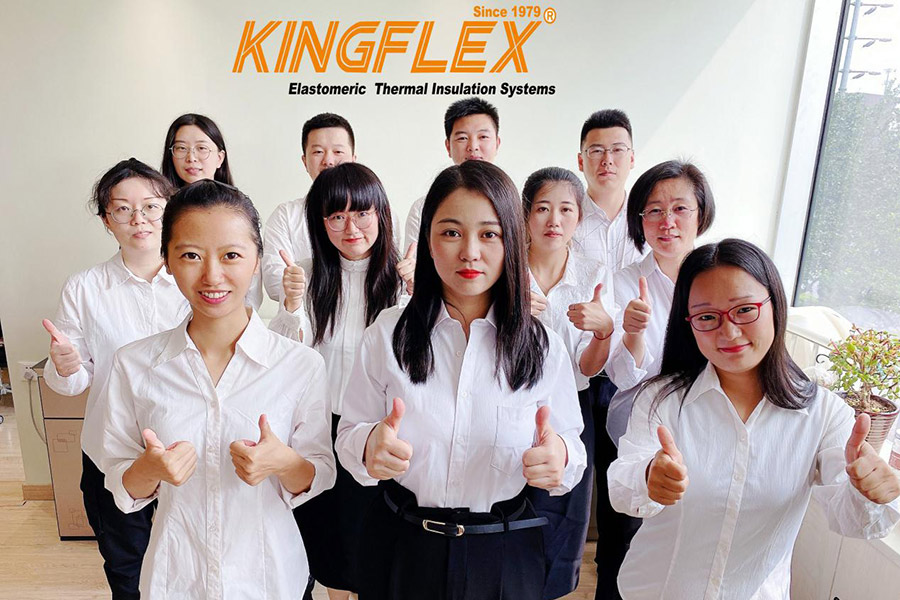
At Kingflex, our team is unified by a shared vision of providing reliable quality and technical support. Our workforce consists of 8 professional chemical and polymer engineers in our R&D Department, 6 international sales consultants, and 230 skilled factory workers.
Our materials are fully traceable from raw polymer batches to the final cured sheets and tubes. This strict quality control ensures that our products meet demanding global standards. We supply major national energy, electric power, and chemical infrastructure initiatives, providing tailored solutions for architectural projects and large-scale industrial plants.

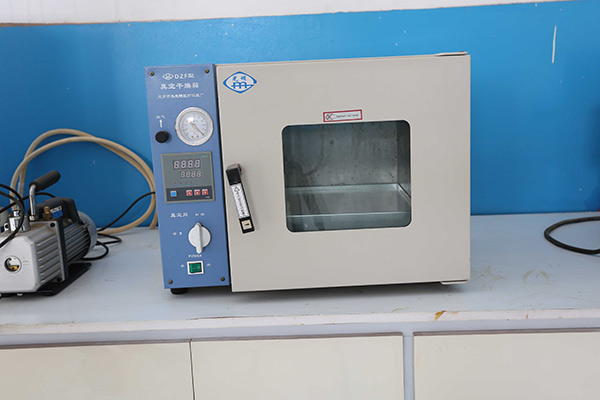
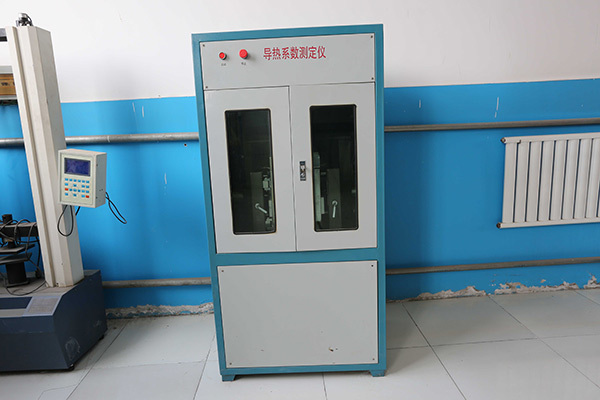
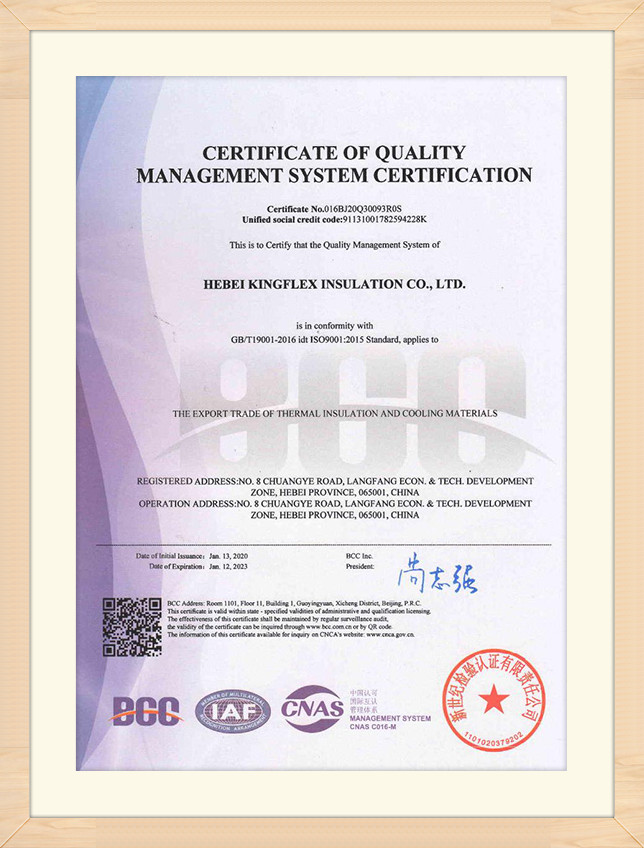
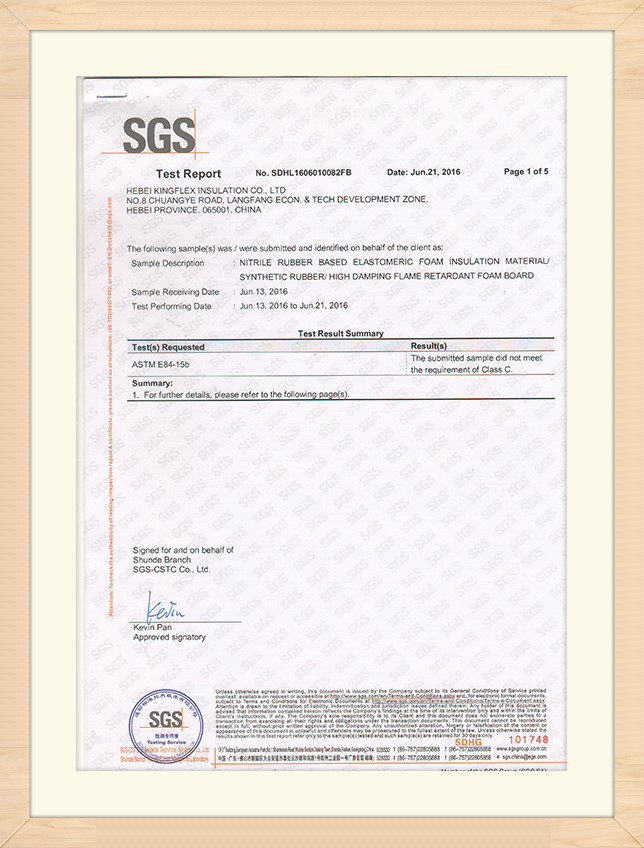
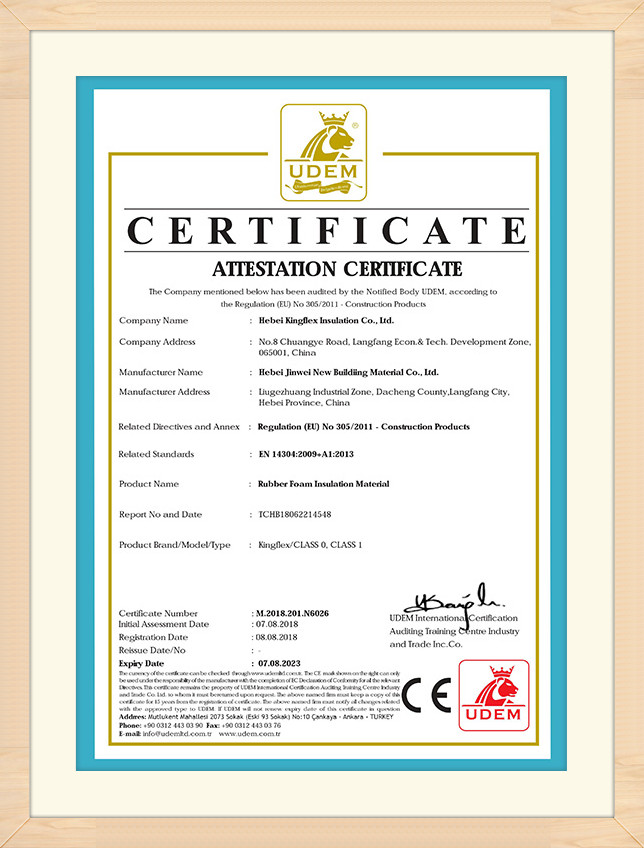
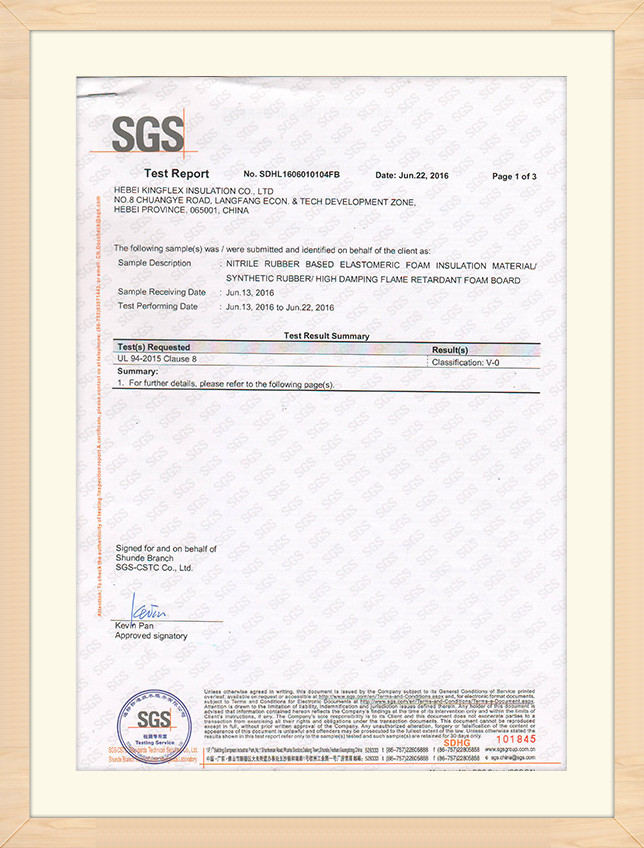
Our commitment to quality is backed by certifications from recognized international safety and quality testing standards.
Providing reliable thermal and acoustic insulation performance across a wide range of settings.
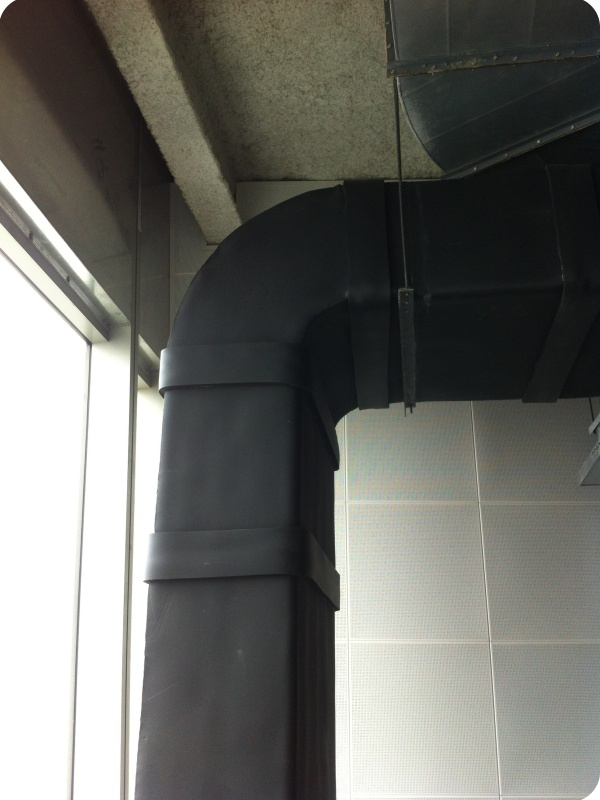
Designed for air conditioning ducts, chilled water lines, and condensate piping. NBR/PVC rubber foam prevents condensation, keeping ambient relative humidity from degrading air delivery efficiency.
Kingflex offers specialized cryogenic insulation for liquid natural gas (LNG) systems and extremely cold chemical processing pipelines, maintaining material flexibility at temperatures down to -196℃.
Our open-cell acoustic insulation line (available in 6mm and 10mm thicknesses) absorbs ambient and structure-borne sound, lowering mechanical noise in HVAC enclosures and machine rooms.
Used in high-speed rail, shipbuilding, and commercial spaces. Its fiber-free composition ensures clean air inside buildings and transit cabins.
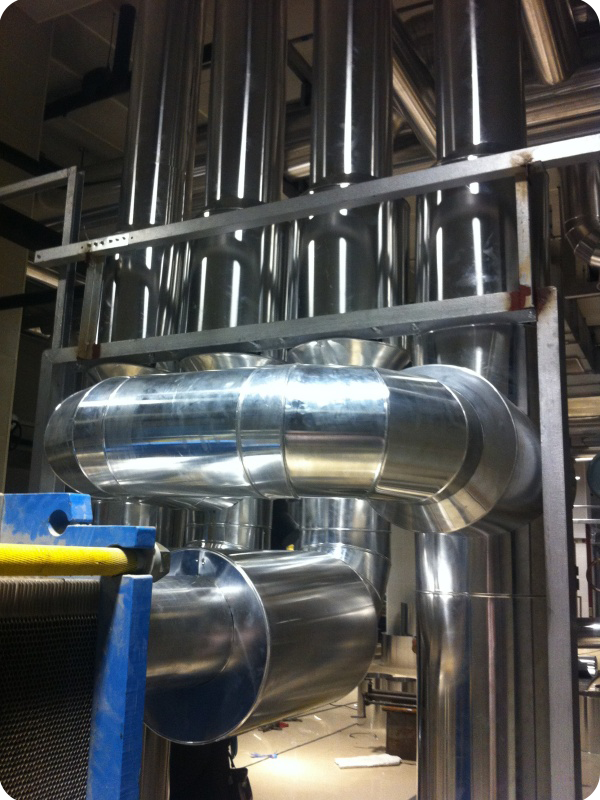
Keeps industrial pipelines at design temperatures, preventing thermal energy loss in oil, gas, chemical processing, and electricity generation facilities.
Applied to external civil and industrial water supply lines to prevent freeze expansion and pipe ruptures in cold climates.
From complex industrial piping to major architectural projects, Kingflex products deliver reliable, long-term performance.
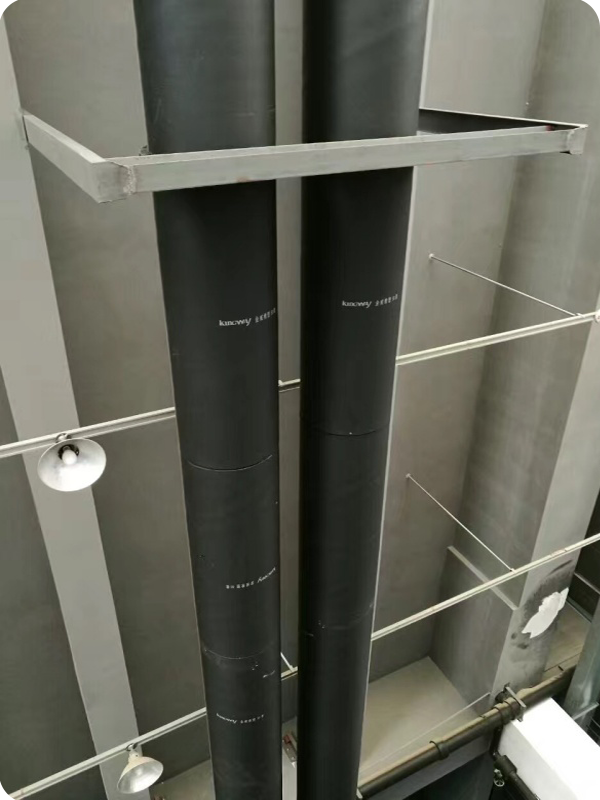
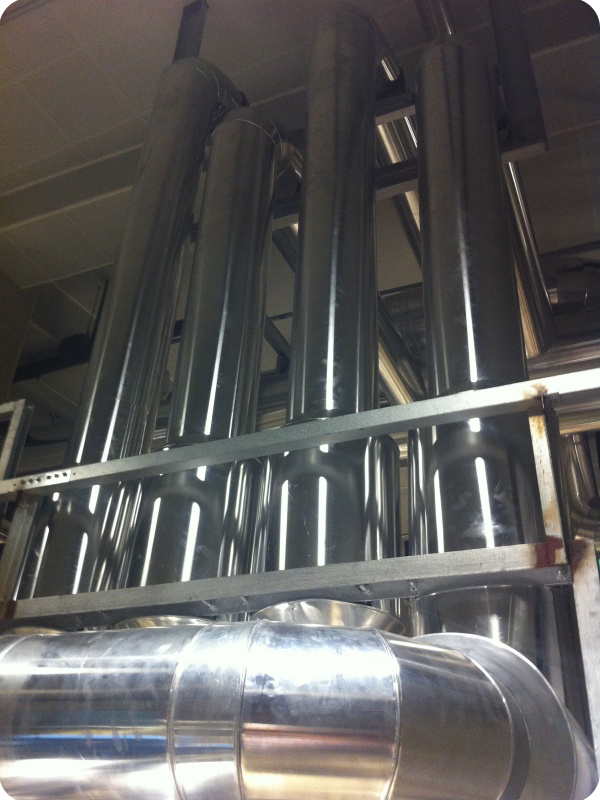
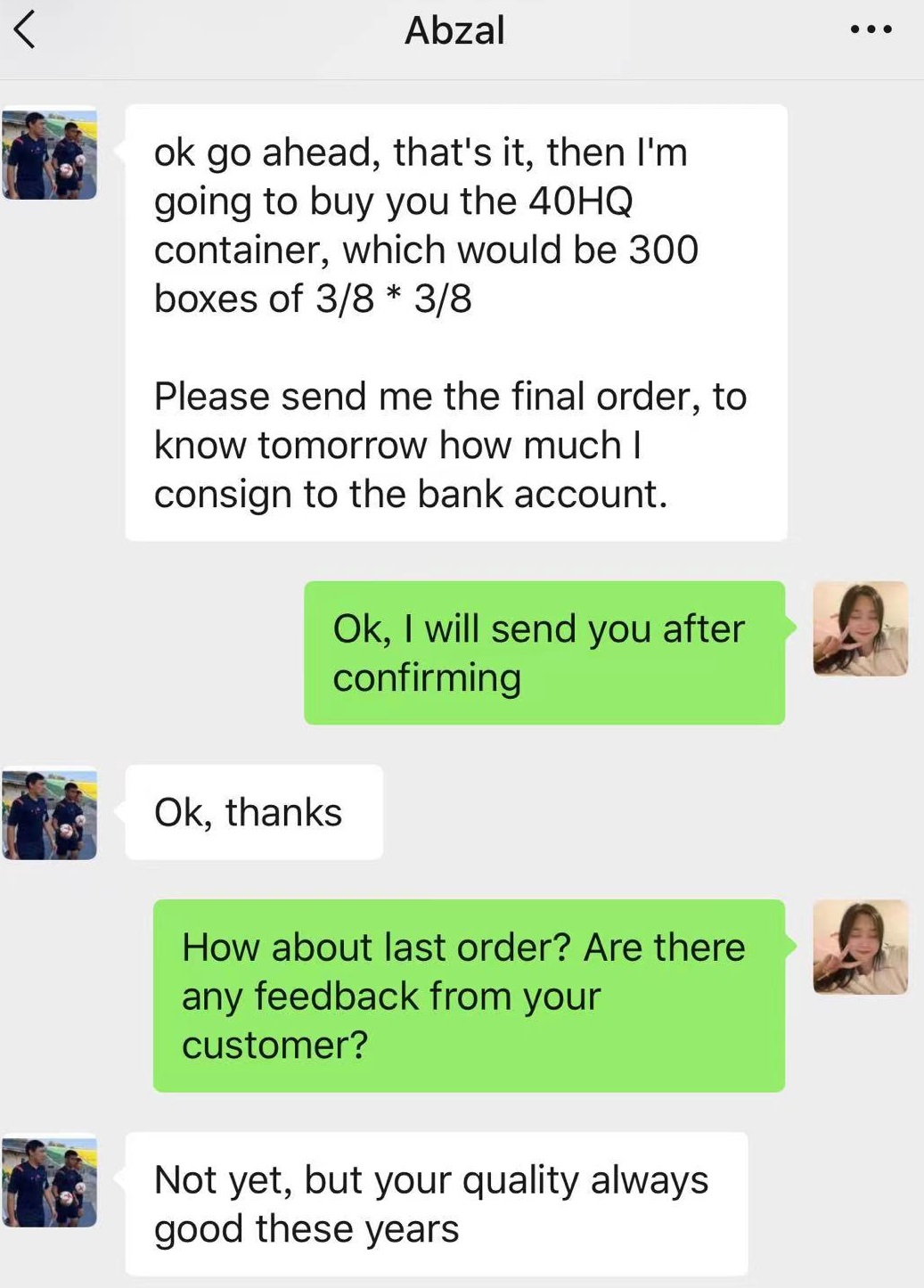
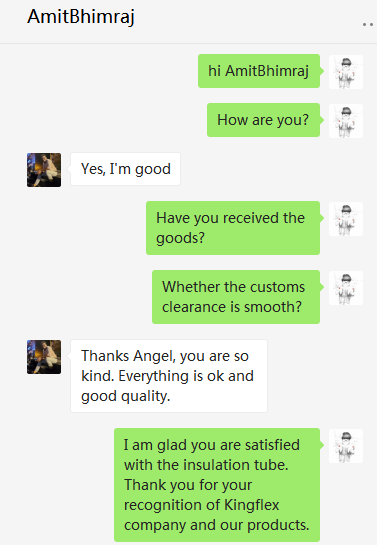
We maintain open communication channels with our international distributors and project procurement managers. The reliability of our manufacturing output and logistics is confirmed by consistent positive feedback from customers worldwide.


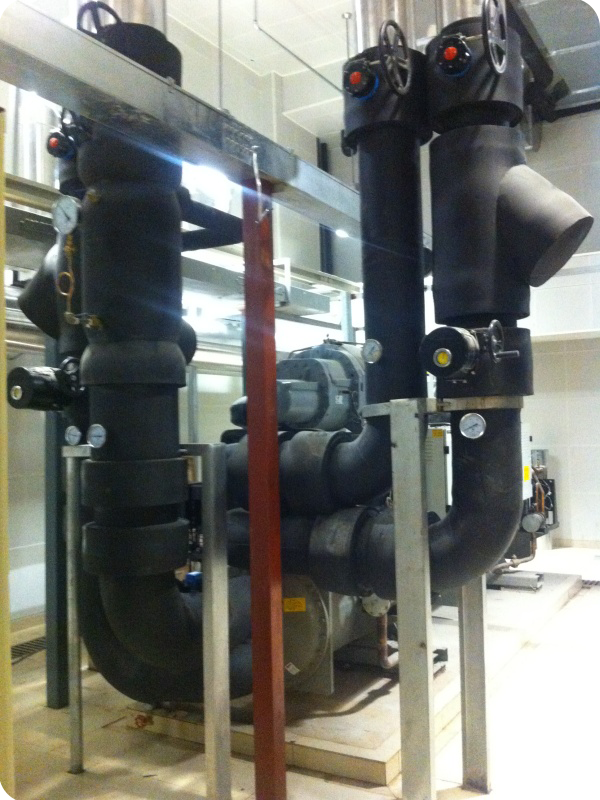
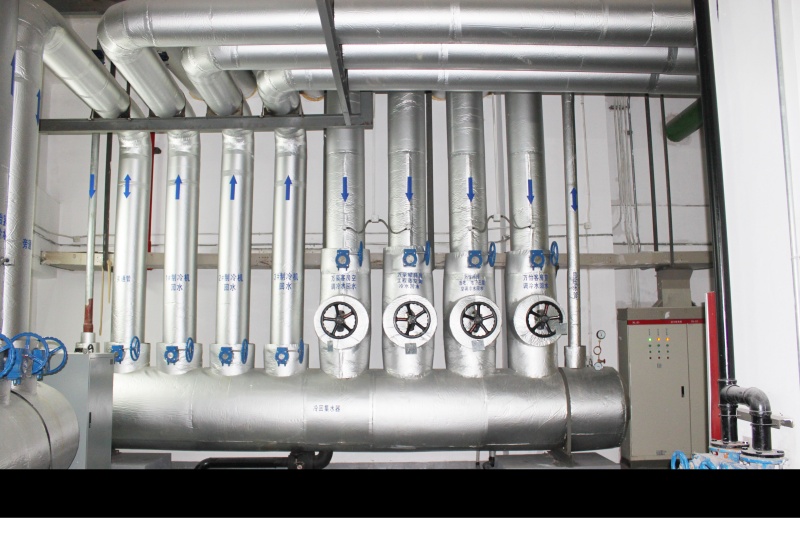
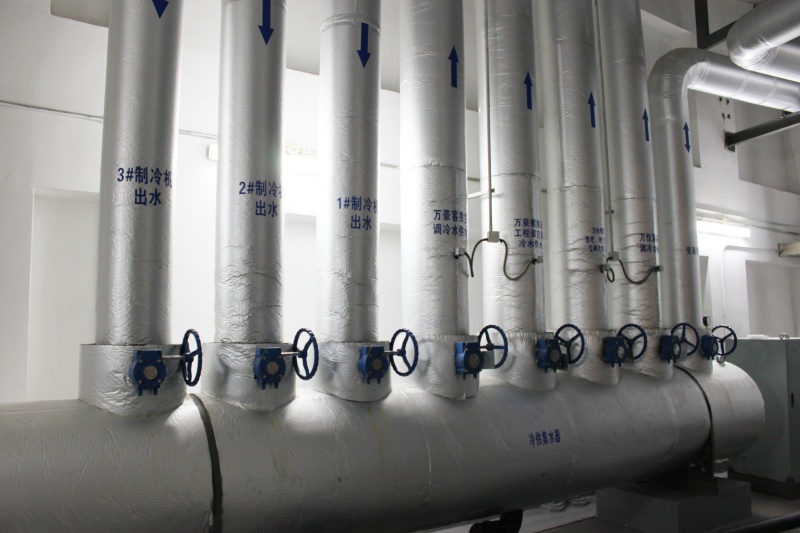
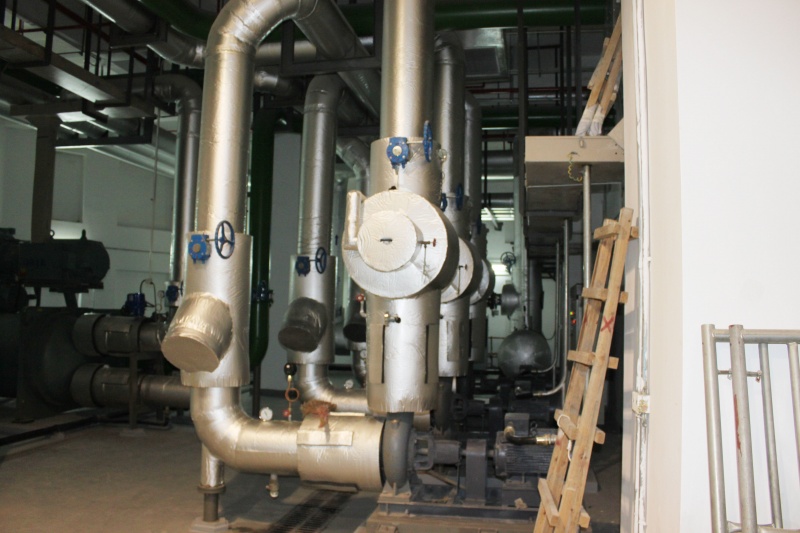
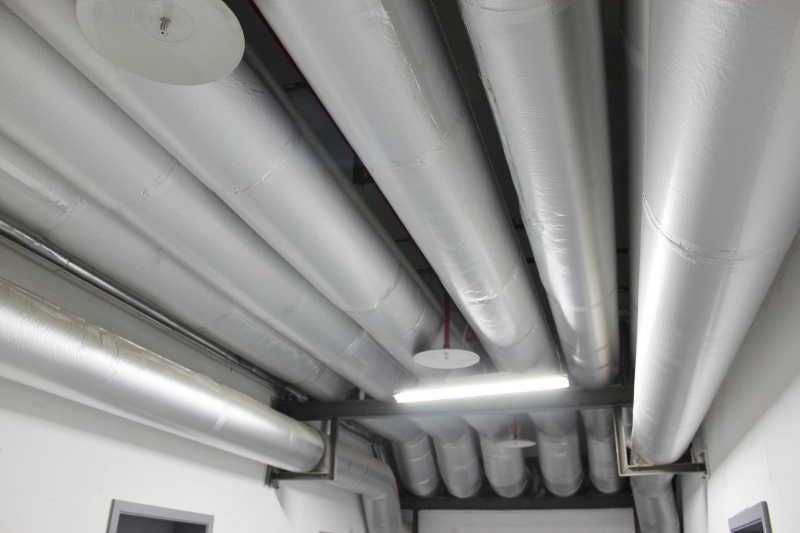
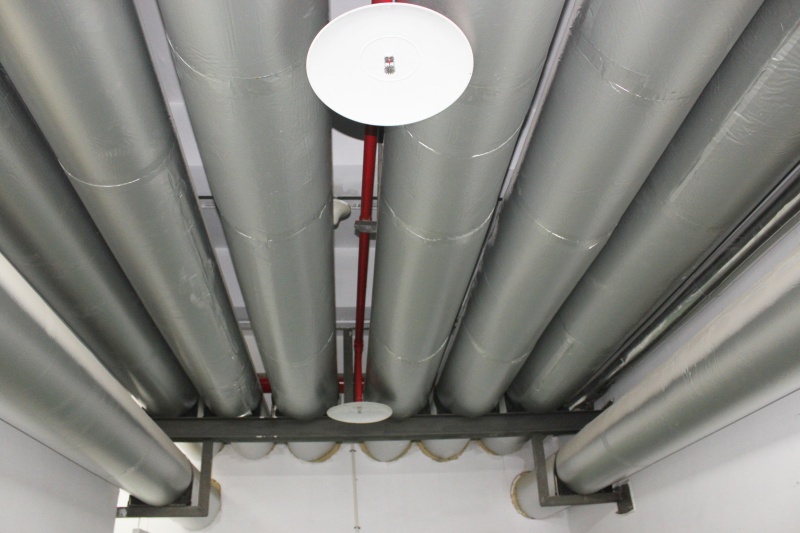
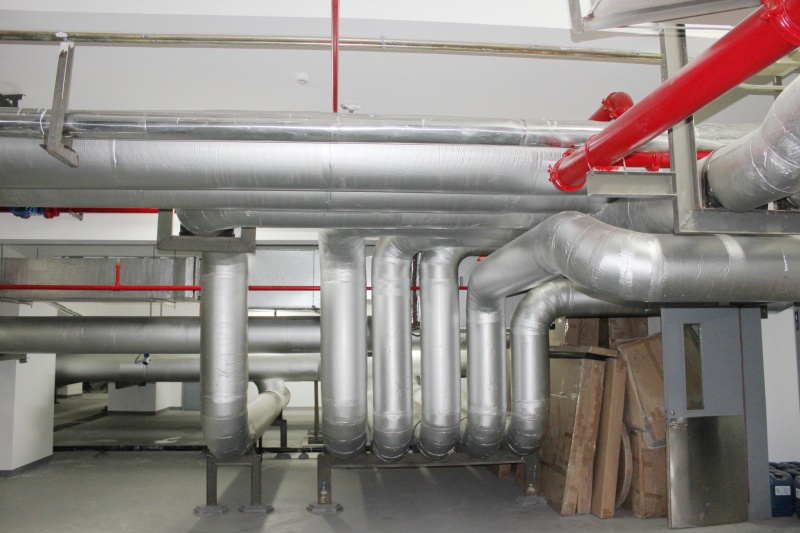
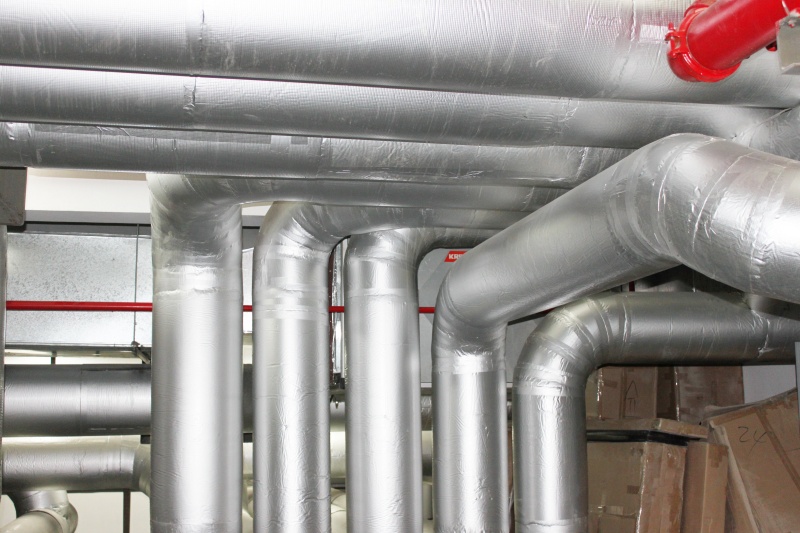
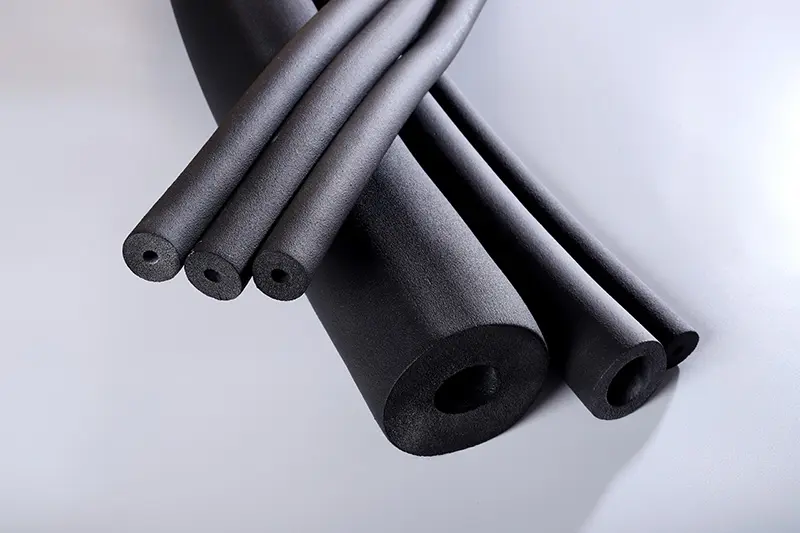
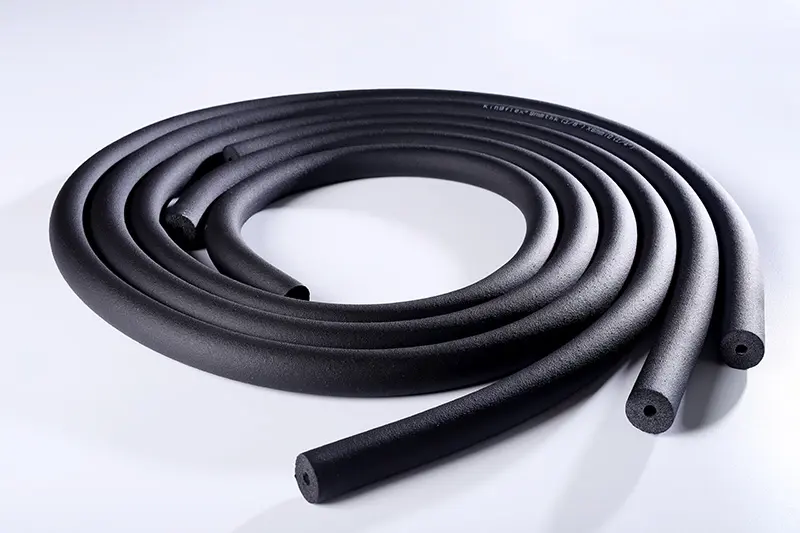
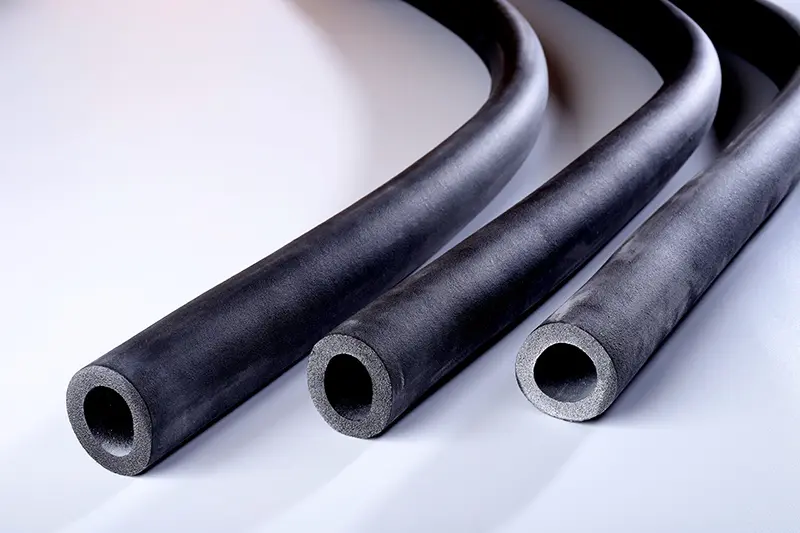
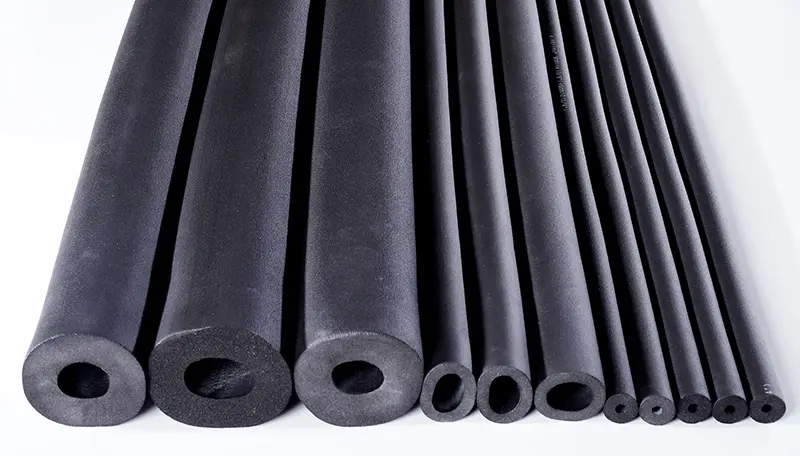
Take a look at the design details, packaging, and raw material handling of Kingflex elastomeric insulation products.
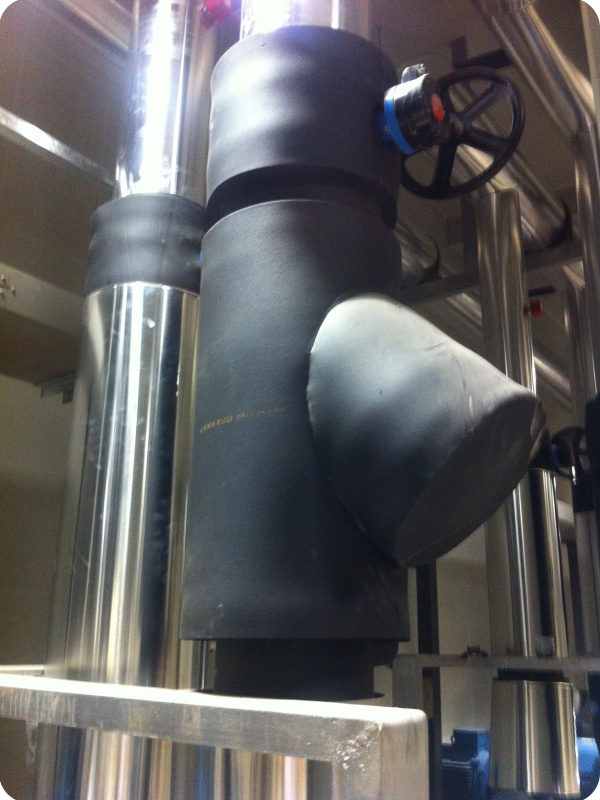
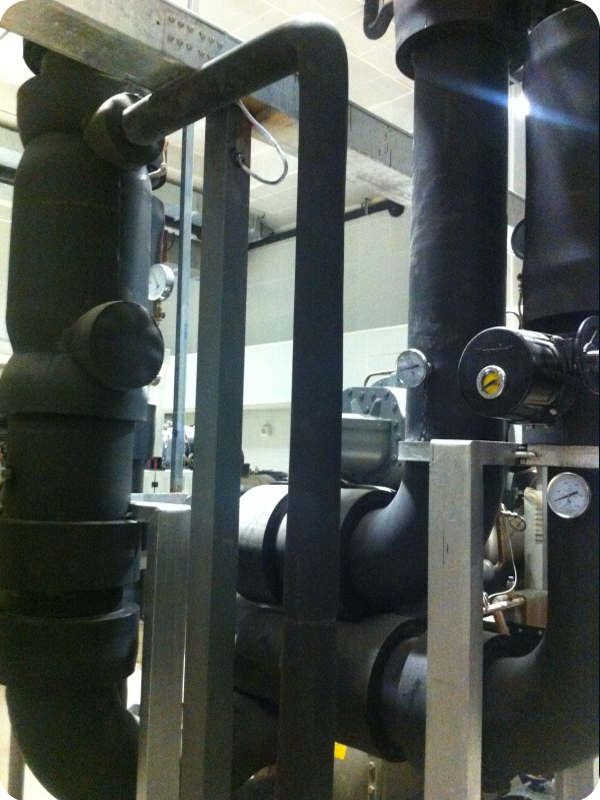
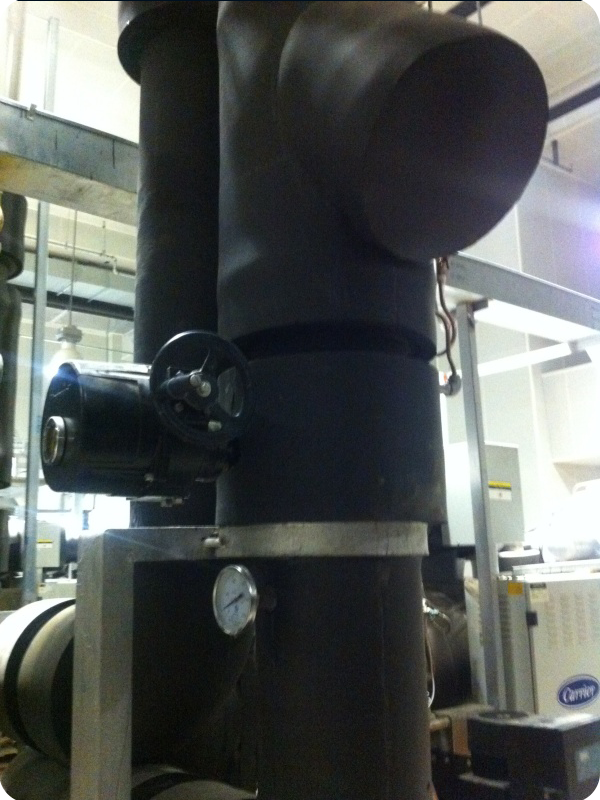

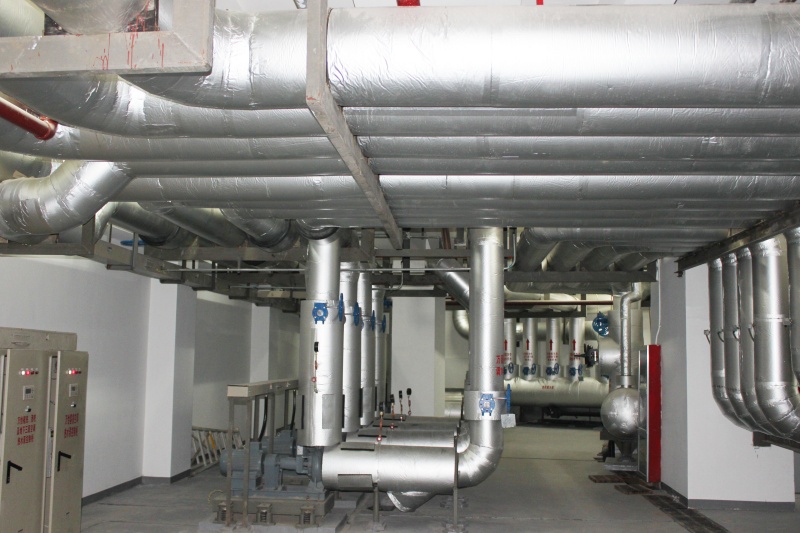
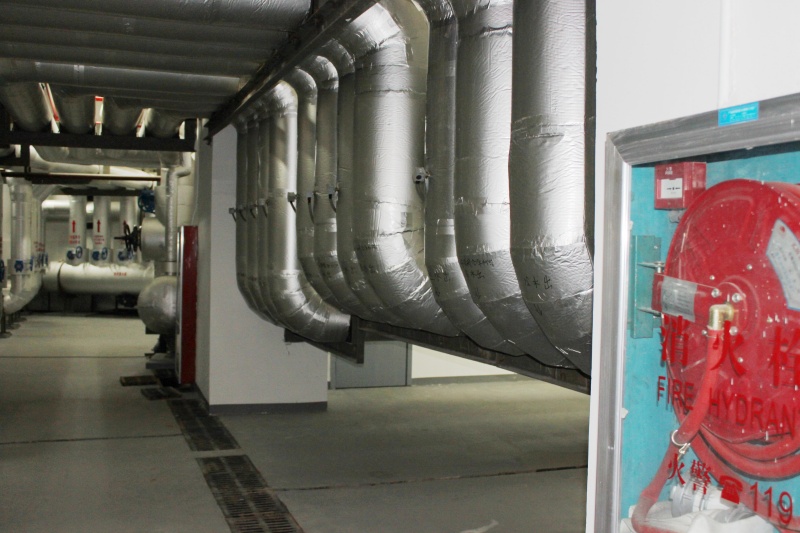
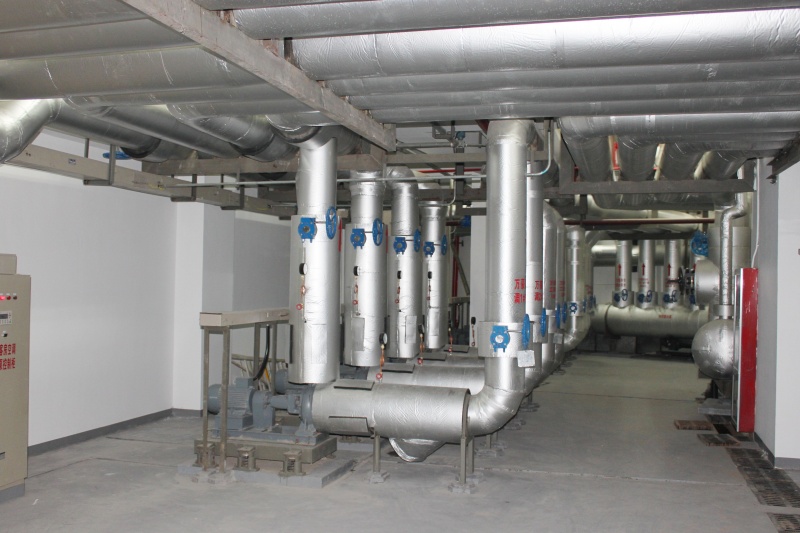
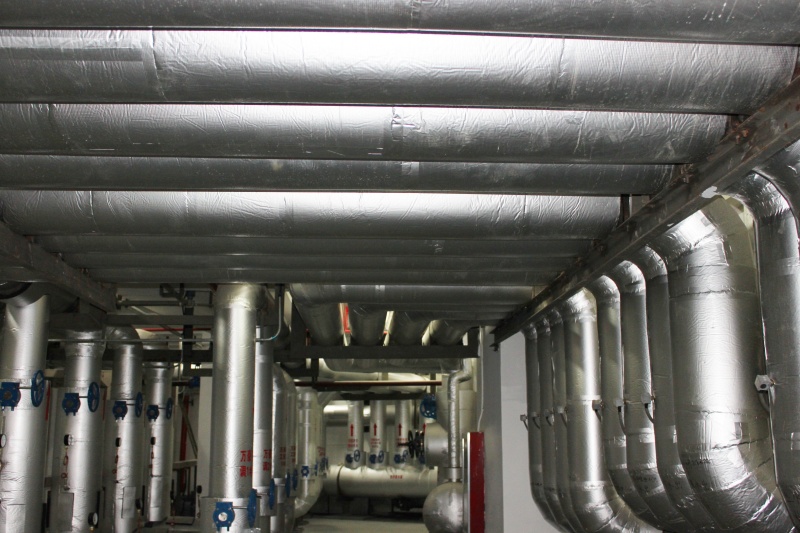
Answers to common questions about elastomeric NBR/PVC foam performance, design, and applications.
Elastomeric rubber foam insulation is used in HVAC systems to insulate air ducts and air conditioning piping, preventing condensation on cold lines. It is also used to insulate industrial process pipelines, steam conduits, solar hot water lines, and cryogenic pipelines. Its closed-cell design resists moisture absorption, making it suitable for acoustic noise reduction in walls, plant rooms, and transit vehicles.
Yes. Our insulation materials meet international fire safety standards, including BS 476 Class 0 and Class 1, UL94 V-0 flame-retardant requirements, and ASTM and CE certifications. They are self-extinguishing and do not support active combustion, helping to restrict flame spread in building structures.
The primary difference is their structural physical chemistry. Rubber foam is a flexible, closed-cell polymer that resists moisture transmission without requiring a vapor barrier, making it suitable for cold line systems where condensation is a concern. Rock wool is a fibrous, open mineral material that handles high temperatures but is highly vapor-permeable. If rock wool's vapor barrier is damaged, it can absorb water, which reduces its insulation performance and increases the risk of corrosion (CUI) on steel pipes.
Yes. We support full OEM and ODM customization. We can adjust the thickness (ranging from 6mm to 50mm), pipe inner diameters (from 6mm to 114mm), density, surface finishes (such as aluminum foil or self-adhesive backings), and fire-retardant additives to meet specific project requirements.
Our products have passed BS 476, CE, REACH, RoHS, UL94, and ASTM testing. These certifications verify that our materials meet international standards for fire safety, environmental safety, chemical toxicity, and physical properties.
Yes. Every batch of Kingflex insulation sheet rolls and pipes is tracked throughout the production process. We trace the formulation stages, raw material sources, extrusion temperatures, curing times, and quality control tests to ensure consistent performance.
We produce sheet rolls and pipes in thicknesses ranging from 6mm up to 50mm, allowing engineers to choose the appropriate thickness based on thermal load and ambient humidity calculations.
Under normal operational conditions within our specified temperature limits (-40℃ to +105℃) and with correct installation, Kingflex rubber foam insulation systems typically last between 10 to 15 years.
Combining Nitrile Butadiene Rubber (NBR) and Polyvinyl Chloride (PVC) blends NBR's flexibility and chemical resistance with PVC's structural strength, fire retardancy, and ozone resistance. This composite material is easy to install, durable, and handles environmental weathering well.
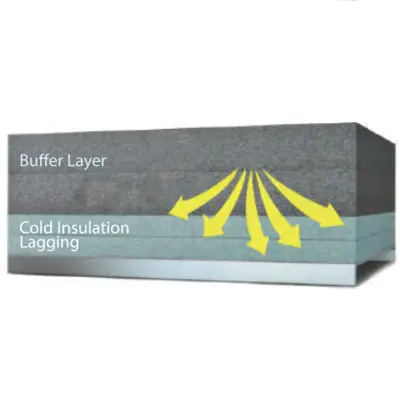
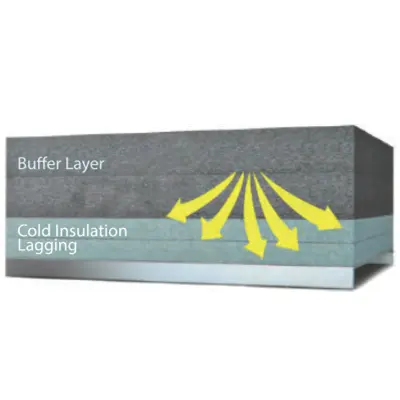
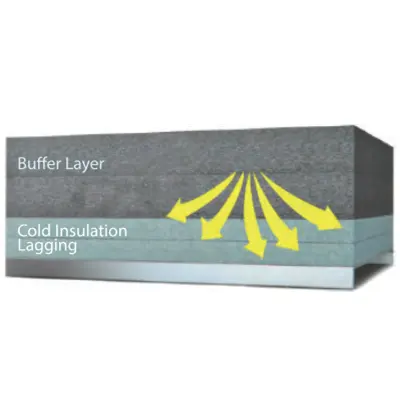
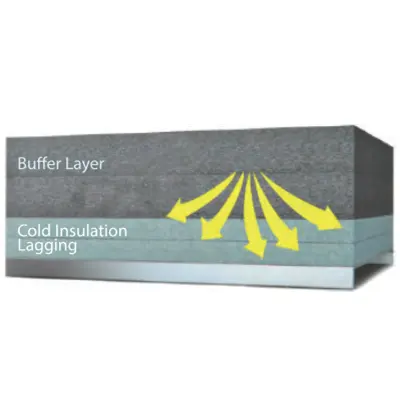
Yes. We manufacture cryogenic-grade elastomeric insulation systems for temperatures down to -196℃. These specialized multi-layered systems are engineered to prevent thermal shock and condensation in liquid gas pipelines.
Additional systems optimized for sound absorption, vibration dampening, and high-integrity pipeline installations.
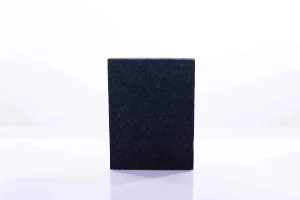
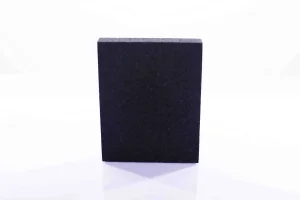
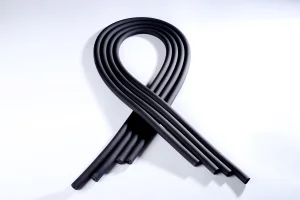
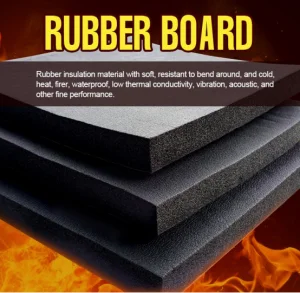
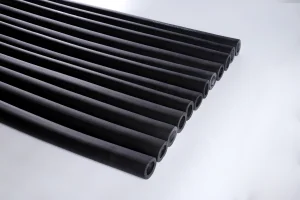
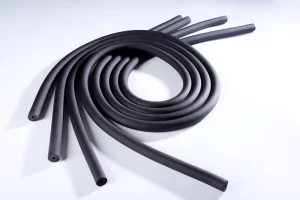

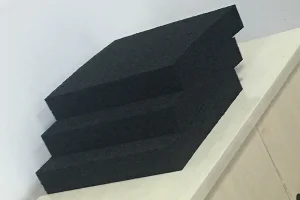
Additional specifications and product models available for architectural and industrial systems.
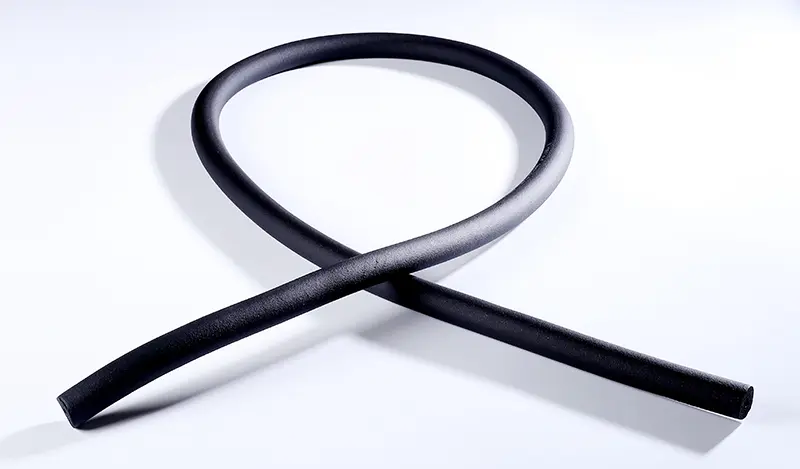

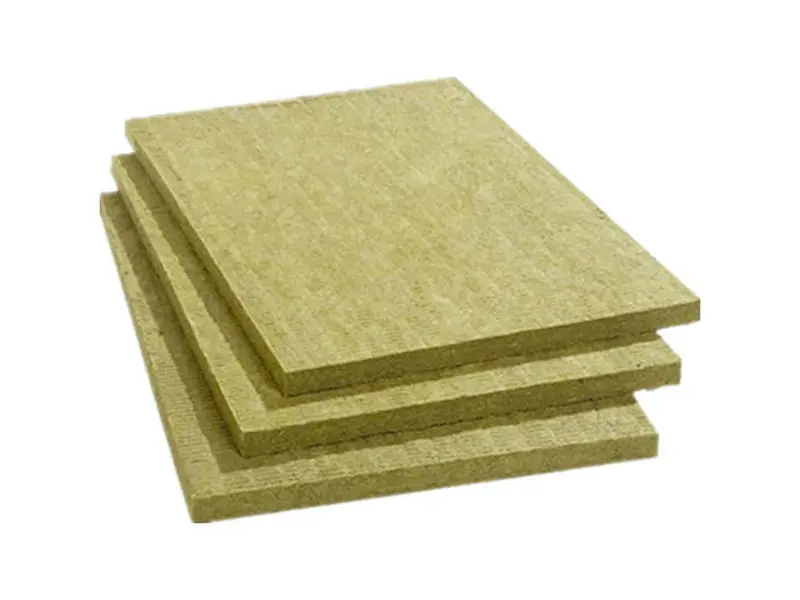
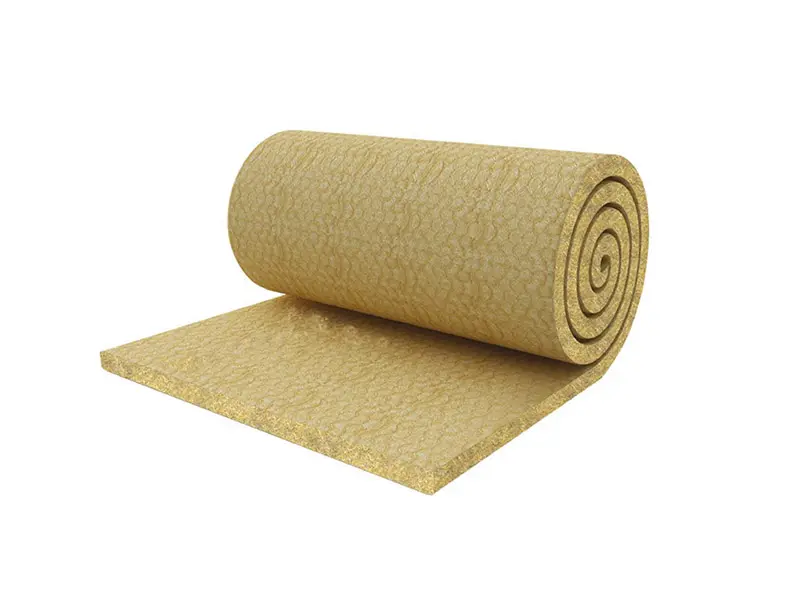
Kingflex is supported by the legacy of the Jinwei Group, established in 1979 as a pioneer of industrial thermal insulation systems in northern China. Over the past 40 years, our focus has expanded from domestic building materials to supplying high-specification NBR/PVC elastomeric thermal systems globally.
Our engineering team works to improve insulation performance, helping system designers meet energy efficiency and fire safety goals. We help clients choose materials, calculate insulation thickness, and guide installation for complex layouts.
Whether managing moisture in high-humidity HVAC ducts or designing insulation for sub-zero LNG processing pipelines, Kingflex provides technical solutions backed by manufacturing expertise.

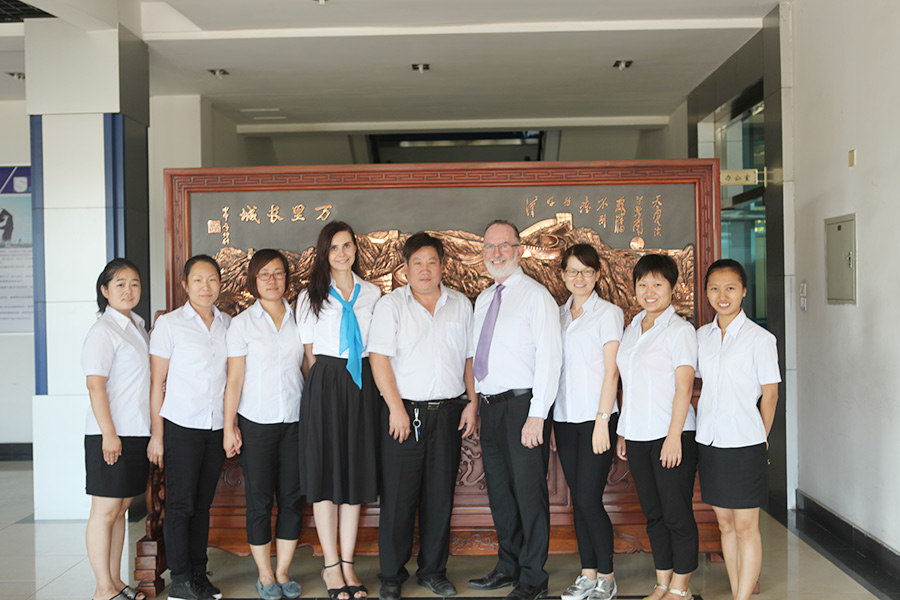
Our factory is designed to handle large-volume supply schedules. With 5 automated lines producing over 600,000 cubic meters annually, we maintain a consistent supply for major construction and infrastructure projects.
Our international sales and logistics teams manage documentation, chemical declarations (REACH/RoHS), and shipping logistics to ensure reliable delivery to job sites worldwide.