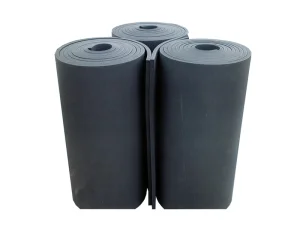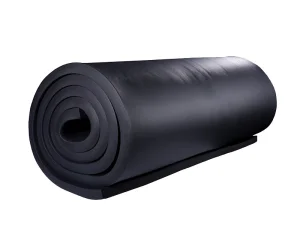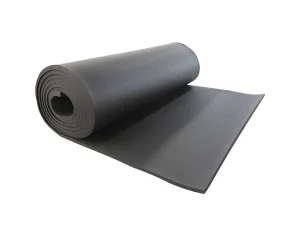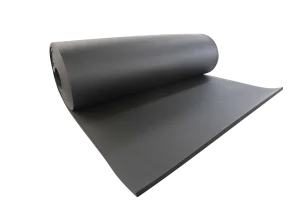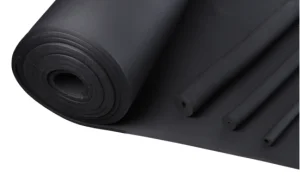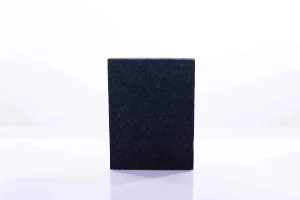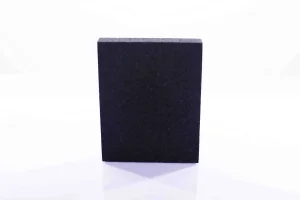
Growth in the construction industry and many other industrial segments, combined with concerns over rising energy costs and noise pollution, is fueling market demand for thermal insulation. With more than four decades of dedicated experience in manufacturing and applications, our insulation manufacturing company is riding on the top of the wave.
Key Performance Features
-
✓
Closed-cell structure provides excellent condensation and energy-loss control
-
✓
Effectively retards degradation due to ultraviolet (UV) radiation
-
✓
Flexible material with dusted, relaxed ID’s for easy installation
-
✓
Superior toughness to withstand on-site handling
-
✓
Built-in vapor barrier eliminates need for additional vapor retarder
-
✓
Complete size range for HVAC/R
-
✓
Distinguish between different pipelines
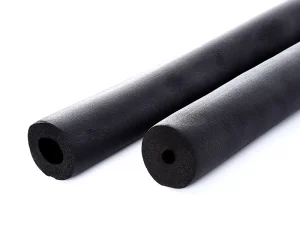
Nominal wall thicknesses of 1/4”, 3/8″, 1/2″, 3/4″, 1″, 1-1/4”, 1-1/2″ and 2” (6, 9, 13, 19, 25 , 32, 40 and 50mm). Standard Length of 6ft (1.83m) or 6.2ft (2m).
Technical Parameters
| Technical Data |
| Property |
Unit |
Value |
Test Method |
| Temperature range |
°C |
-50 - 110 |
GB/T 17794-1999 |
| Density range |
Kg/m³ |
45-65Kg/m³ |
ASTM D1667 |
| Water vapor permeability |
Kg/(m.s.pa) |
≤ 0.91×10 ﹣¹³ |
DIN 52 615 / BS 4370 Part 2 1973 |
| μ |
- |
≥ 10000 |
- |
| Thermal Conductivity |
W/(m.k) |
≤ 0.030 (-20°C) |
ASTM C 518 |
| ≤ 0.032 (0°C) |
| ≤ 0.036 (40°C) |
| Fire Rating |
- |
Class 0 & Class 1 |
BS 476 Part 6 part 7 |
| Flame Spread and Smoke Developed Index |
- |
25/50 |
ASTM E 84 |
| Oxygen Index |
- |
≥ 36 |
GB/T 2406, ISO4589 |
| Water Absorption, % by Volume |
% |
20% |
ASTM C 209 |
| Dimension Stability |
- |
≤ 5 |
ASTM C534 |
| Fungi resistance |
- |
Good |
ASTM 21 |
| Ozone resistance |
Good |
GB/T 7762-1987 |
| Resistance to U.V. and weather |
Good |
ASTM G23 |
Application & Performance Integrity
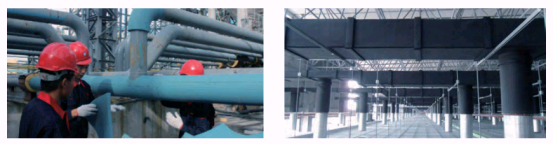
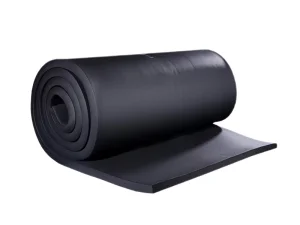
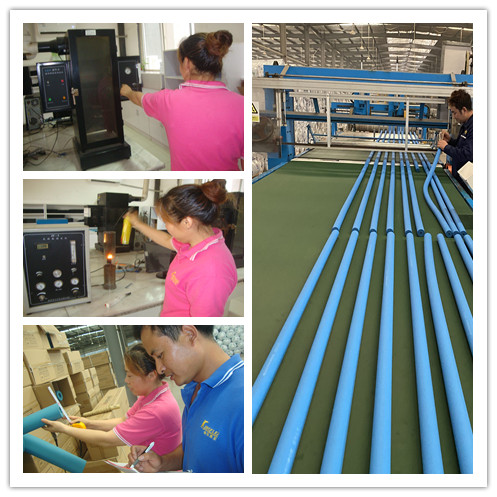
Rubber Foam Insulation could be used in schools, hospitals, government institutions and commercial spaces of all types value the long-term performance. Its moisture-resistant characteristics make it especially valuable on chilled-water and refrigeration piping where condensation might otherwise soak through fibrous types of insulations, significantly degrading their thermal performance, leaving them susceptible to fungal growth and ultimately shortening their life cycle. Moisture-resistant rubber foam insulation, however, maintains its physical and thermal integrity -- for the life of the mechanical system!
Frequently Asked Questions
Q:What are the main advantages of using a closed-cell structure for insulation?
The closed-cell structure provides exceptional control against condensation and prevents energy loss, ensuring long-term thermal efficiency in mechanical systems.
Q:Does this rubber foam insulation require an additional vapor retarder?
No. It features a built-in vapor barrier that completely eliminates the need for additional vapor retarders, simplifying the installation process.
Q:What sizes and wall thicknesses are available for installation?
It comes in nominal wall thicknesses ranging from 1/4” up to 2” (6mm to 50mm) and standard lengths of either 6ft (1.83m) or 6.2ft (2m) to support a complete size range for HVAC/R systems.
Q:What is the operational temperature range and fire safety rating of this material?
The material operates safely within a temperature range of -50°C to 110°C. It meets the Class 0 & Class 1 fire rating standard under BS 476 Part 6 & 7.
Q:Why is rubber foam preferred over fibrous insulation on chilled-water piping?
Fibrous insulation can soak through when condensation occurs, leading to performance degradation and fungal growth. Our moisture-resistant rubber foam retains its structural and thermal integrity for the life of the mechanical system.
Q:Does this insulation material withstand outdoor conditions?
Yes, the technical data shows it has good resistance to ultraviolet (UV) radiation, ozone, and weathering, effectively retarding environmental degradation.