Kingflex
Selecting reliable China warehouse insulation manufacturers and suppliers requires more than comparing prices or panel thickness. Warehouse Insulation affects temperature stability, energy use, condensation control, worker comfort, and product protection. A well-designed system can keep a cold-storage door area stable, reduce heat transfer through metal roofs, and limit moisture around joints. Small details matter.
This guide examines experienced Chinese manufacturers through practical and professional criteria. These include material performance, core density, fire-safety documentation, thermal conductivity, production capacity, quality-control procedures, and after-sales support. It also considers whether suppliers can provide insulated sandwich panels, roof systems, wall systems, doors, and customized solutions for different warehouse layouts. Clear technical datasheets are essential. So are traceable test reports.
Factory experience should be judged carefully. Product photos alone prove little. Buyers should request samples, installation drawings, batch records, and references from comparable projects. Climate also changes the answer. A warehouse in a humid coastal city may need stronger vapor control than one in a dry inland region. Cold rooms require tighter joints and dependable sealing. Ordinary storage buildings may prioritize durability and cost.
No supplier is perfect. Some websites present impressive claims but provide limited evidence. That deserves attention. This overview encourages readers to verify certifications, inspect manufacturing capabilities, and clarify warranty terms before signing contracts. Practical judgment remains necessary, because the cheapest insulation system may create expensive repairs later. Reliable suppliers communicate clearly, admit limitations, and support performance beyond delivery.
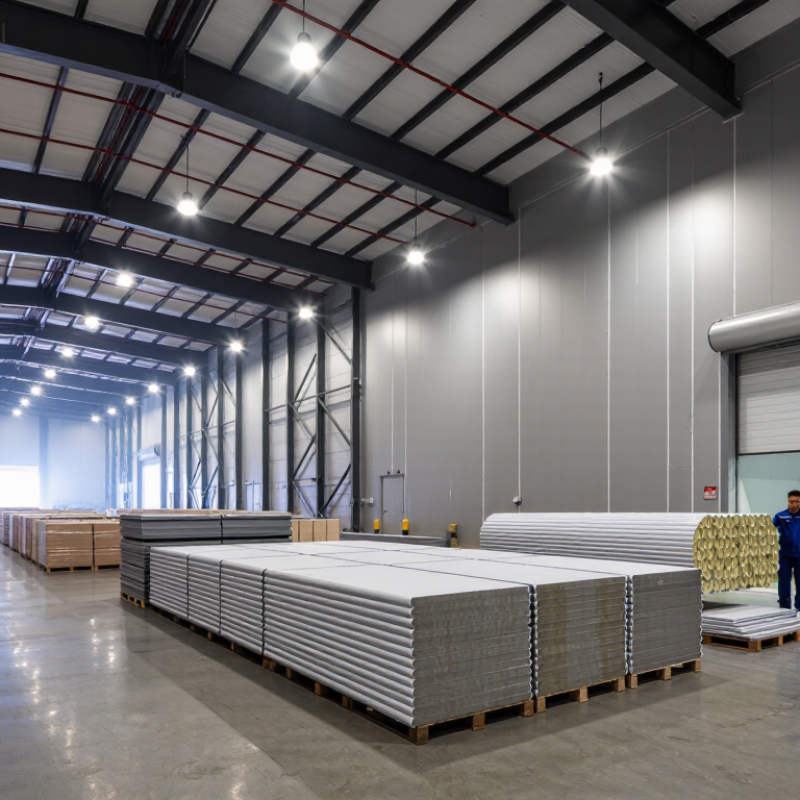
Warehouse insulation controls heat flow, surface temperature, and moisture movement across roofs, walls, floors, and loading doors. Its purpose is not simply to keep a building warm. It helps stabilize stored goods, reduce condensation, and limit energy loss during heating or cooling. The International Energy Agency reported that buildings consume about 30% of global final energy, making thermal performance a practical operating concern.
The scope changes with warehouse use. Dry storage may need roof and wall insulation, while cold storage requires continuous insulation, vapor control, sealed joints, and insulated doors. The U.S. Department of Energy estimates that heating, ventilation, and air conditioning use about 40% of commercial building energy. Better insulation can reduce this demand, but results depend on installation quality, air leakage, and local climate. Air leakage matters. Small gaps around dock seals can undermine expensive panels.
Professional specifications should compare thermal conductivity, thickness, fire performance, moisture resistance, compressive strength, and declared service life. Independent test certificates and production quality records improve supplier reliability. However, insulation is not a magic blanket. A warehouse may still waste energy through open doors, damaged vapor barriers, or poorly maintained refrigeration equipment. Details decide. In practice, a modestly imperfect design with careful inspection may outperform a high-performance system installed without site control. The U.S. Department of Energy’s building research also emphasizes commissioning and envelope sealing as important efficiency measures.
Warehouse insulation systems must control heat flow, moisture, air leakage, and fire risk. A low U-value is not enough. Joints matter too.
The International Energy Agency reported that buildings used about 30% of global final energy in 2022. This figure supports tighter envelopes and better thermal continuity. For warehouses, designers should verify U-values under ISO 6946 methods. They should also check thermal bridges around doors, roof penetrations, and wall connections. Even small gaps can create cold surfaces, condensation, and mold. In refrigerated facilities, vapor barriers must face the correct side of the assembly. Poor placement can quietly damage panels and stored goods.
Air tightness deserves equal attention. The ASHRAE Handbook identifies uncontrolled infiltration as a major load in temperature-controlled spaces. High-speed doors, dock seals, and service openings need regular testing. Fire performance is equally important. Insulation cores and facings should meet the project’s required reaction-to-fire classification and local building codes. Documentation should include test reports, thickness tolerances, moisture resistance, compressive strength, and expected service life.
Field conditions are less perfect than drawings suggest. A damaged panel edge can defeat an excellent specification. This is often overlooked. Maintenance teams should inspect fasteners, seals, drainage paths, and door curtains at least annually. Energy models help, but measured temperatures and humidity reveal the truth. Suppliers that provide verified data, installation guidance, and traceable quality records offer stronger reliability than suppliers quoting only conductivity.
China Top Warehouse Insulation Manufacturers and Suppliers
Common insulation materials include fiberglass, mineral wool, PIR panels, EPS, and spray polyurethane foam. Fiberglass suits large roof areas and offers a lower-cost solution. Mineral wool provides strong fire resistance and sound control. PIR panels deliver high thermal performance with thinner sections. EPS remains practical for many wall and floor applications.
Installation quality often matters as much as material selection. Sandwich panels should be tightly joined, with sealed laps and protected fasteners. Blanket insulation needs continuous support and careful overlap. Spray foam must cover gaps around doors, roof penetrations, and structural connections. Thermal bridges at steel columns can weaken the whole envelope. The IEA’s Energy Efficiency 2023 report states that buildings consume about 30% of global final energy. GlobalABC’s 2022 Global Status Report reports an even higher 34% share. Warehouses may be simpler than offices, but heat loss still deserves measurement.
Tips: Check the roof first. Water damage ruins insulation performance. Use thermal imaging after installation, especially around loading doors. Confirm the vapor-control layer on the correct side for the local climate. A thicker product is not always better. Poor joints can cancel its rated value. Fire, moisture, impact resistance, and maintenance access need equal attention. Specifications often look perfect on paper, yet site conditions are less cooperative. Recheck details before closing the wall.
| Insulation Material | Typical Thermal Conductivity (W/m·K) | Common Warehouse Applications | Typical Installation Method | Key Selection and Installation Considerations |
|---|---|---|---|---|
| Glass Wool (Fiberglass) | Approximately 0.032–0.045 | Roof and wall cavities in general-purpose warehouses; insulated metal building systems | Fit blankets or batts between framing members, or install faced rolls beneath roof cladding. Support the insulation and seal laps and penetrations. | Use suitable protective equipment during handling. Prevent gaps and compression, and select a facing or separate vapor-control layer appropriate to the building’s climate and use. |
| Stone Wool (Mineral Wool) | Approximately 0.034–0.045 | Warehouse roofs, walls, and partitions where fire performance or sound absorption is important | Install batts between structural members or boards within a wall or roof assembly. Fit pieces closely and secure them against sagging or displacement. | Stone wool is noncombustible in many product formulations, but the complete assembly’s fire rating depends on all components and tested construction details. Protect it from persistent moisture. |
| Expanded Polystyrene (EPS) | Approximately 0.031–0.040 | Rigid-board insulation for warehouse walls, roofs, and some floor assemblies | Fix boards to a suitable substrate or install them within a framed or cladding system. Stagger joints where practical and seal joints according to the assembly design. | Check the specified compressive strength for load-bearing applications. EPS is combustible and generally requires protection as part of a code-compliant assembly. |
| Extruded Polystyrene (XPS) | Approximately 0.029–0.036 | Floor slabs, perimeter insulation, and locations where moisture resistance or compressive strength is required | Lay boards on a prepared, even substrate or install them in the designed floor or wall assembly. Fit joints tightly and protect boards during construction. | Confirm long-term compressive performance for the floor load. Provide appropriate fire protection and verify compatibility with membranes, adhesives, and adjacent materials. |
| Polyisocyanurate (PIR) Rigid Board | Approximately 0.022–0.028 | Roof and wall systems where high thermal resistance is needed with limited thickness | Install boards as part of a designed roof or wall assembly, with joints fitted closely and sealed as specified. Mechanical fasteners or adhesives may be used where approved for the system. | Thermal performance varies with product, temperature, facing, and assembly. Detail penetrations and joints carefully, and use a fire-rated assembly where required. |
| Spray Polyurethane Foam (SPF) | Approximately 0.022–0.030 | Irregular roof and wall surfaces, joints, and areas where a continuous insulation layer is needed | Apply by trained installers to a clean, dry substrate in controlled lifts, following the specified thickness and curing requirements. Protect the finished foam as required by code. | Application quality depends on substrate conditions, temperature, mixing, and thickness control. Provide suitable ventilation during application and verify fire-protection requirements. |
| Reflective Foil Insulation | Performance depends on the complete assembly; no single material conductivity value applies | Roof or wall assemblies where radiant heat transfer is a concern | Install the reflective surface facing an adjacent air space, with edges and penetrations detailed as specified by the system design. | Reflective surfaces reduce radiant heat transfer only when installed with the required air space. They do not replace conductive insulation in assemblies that need a specified thermal resistance. |
Note: Thermal conductivity figures are indicative ranges commonly reported for insulation materials; actual values vary by product, density, temperature, and test method. Select thickness and assembly details through project-specific thermal, moisture, structural, and fire-code design. Follow applicable local regulations and the product installation instructions.
China’s warehouse insulation suppliers often specialize in different parts of the building envelope. Some manufacturers focus on insulated metal panels, combining steel facings with mineral wool or foam cores. Their products suit large walls and roofs where quick installation matters. Ask for panel thickness, joint details, and test data—not just a headline insulation value. Small details matter.
Other suppliers concentrate on glass wool, rock wool, or flexible insulation rolls. These materials can fit around roof purlins, ducts, and irregular spaces. A capable supplier should explain how products handle moisture, compression, and temperature changes. Request samples and inspect the edges, facing, and consistency of the material. A tidy sample does not prove every shipment will match, so production records are worth checking.
Some Chinese firms operate as manufacturers, while others coordinate sourcing and export services. Their experience with warehouse projects may vary widely. Discuss roof span, local climate, fire-safety requirements, and installation methods before comparing quotations. Ask who checks product quality and what documentation accompanies each batch. Be cautious when specifications feel unusually vague. A useful supplier will answer practical questions clearly, though even careful planning cannot prevent every site problem.
Selecting among China’s warehouse insulation manufacturers requires more than comparing quoted prices. Begin with the building’s climate, storage temperature, roof structure, and humidity exposure. A supplier should explain how these conditions affect thermal performance, condensation risk, and service life. Ask for recent laboratory reports showing thermal conductivity, water absorption, density, and fire performance.
Request product samples and inspect their edges, surface bonding, and dimensional consistency. Small gaps around panels can create cold bridges and higher energy costs. Experienced suppliers can provide installation drawings, joint details, and guidance for doors, vents, and loading areas. Their technical team should answer clearly, not hide behind generic specifications. Check factory quality records, production capacity, packaging methods, and inspection procedures for each batch.
Supplier references are useful, but verify them with questions about delays, replacement handling, and actual energy performance. A written warranty should define measurable conditions, exclusions, and response times. Do not select the thickest material automatically. It may increase cost without solving moisture problems. A practical comparison table can weigh performance, maintenance, delivery reliability, and total ownership cost. Weaker suppliers sometimes offer attractive figures without explaining test conditions. That deserves caution. In my experience, pilot installation is valuable, although it adds time and may expose design mistakes early. A suitable solution should fit the warehouse, the installers, and the operating budget—not merely win a spreadsheet comparison.
It controls heat flow, surface temperature, and moisture movement. It also protects stored goods from temperature swings.
No. Dry storage may need roof and wall insulation. Cold storage usually needs continuous insulation, vapor control, and sealed doors.
Common choices include fiberglass, mineral wool, PIR panels, EPS, and spray foam. Each material has different strengths.
Mineral wool generally provides strong fire resistance and sound control. It may need more space than thinner panel systems.
Small gaps can reduce performance. Sealed panel joints, protected fasteners, and careful overlaps help maintain the insulation layer.
Use thermal imaging after installation. Check loading doors, roof penetrations, steel columns, and wall connections.
Not always. Poor joints, moisture damage, or air leakage can cancel the benefit of extra thickness.
Confirm the vapor-control layer is correctly positioned. Inspect water damage, gaps, fasteners, and maintenance access.
No. Open doors, damaged barriers, and poorly maintained cooling equipment can still waste energy. Insulation is not magic.
Compare thermal conductivity, thickness, fire performance, moisture resistance, compressive strength, and service life. Site conditions may still change the result.
This article provides a practical overview of Warehouse Insulation, explaining its purpose, application scope, and key benefits for industrial and logistics facilities. It examines how effective insulation can help control indoor temperature, reduce energy consumption, manage condensation, improve working conditions, and protect stored goods. The article also outlines essential performance requirements, including thermal resistance, moisture control, fire safety, durability, acoustic performance, and compatibility with the warehouse structure and operating environment.
It further compares common insulation materials and installation methods, highlighting considerations for roofs, walls, floors, ceilings, doors, and temperature-controlled areas. In addition, the article introduces the main capabilities readers should look for in Chinese warehouse insulation manufacturers and suppliers, such as product quality, technical support, customization, installation expertise, certifications, delivery reliability, and after-sales service. A final evaluation framework helps buyers compare suppliers and select a safe, efficient, durable, and cost-effective insulation solution suited to their warehouse requirements.
