 Kingflex
Kingflex
Kingflex
Engineered for high thermal resistance, extreme low-temperature stability, and moisture-vapor prevention in maritime zones.
Addressing the challenges of energy security, port development, and cryogenic infrastructure in tropical environments.
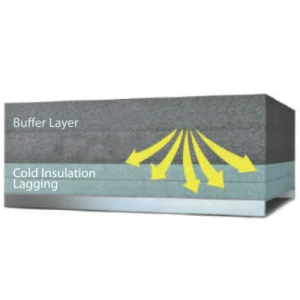
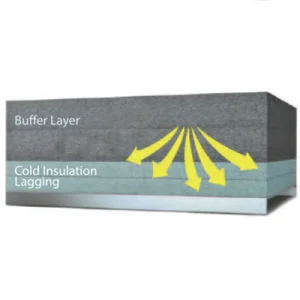
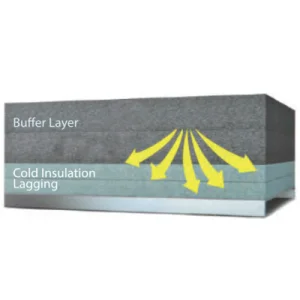
As Sri Lanka positions itself as a dominant hub on the global shipping lanes, the development of LNG bunkering terminals in Colombo Port and Hambantota Port represents a massive technological jump. Handling liquefied natural gas at temperatures as low as -162°C requires sophisticated engineering. Standard insulation materials are highly susceptible to moisture ingress and subsequent freeze-thaw cracking due to Sri Lanka's high relative humidity (averaging 75% to 90% year-round). Liquid water or ice formation on pipeline surfaces dramatically increases thermal conductivity, causing critical boil-off occurrences and system damage. Choosing premium, closed-cell elastomeric cryogenic foam insulation guarantees a continuous vapor barrier, mitigating corrosion under insulation (CUI).
Beyond LNG, Sri Lanka's food processing, fish exports (yellowfin tuna and seafood supply chains), chemical manufacturing, and biomedical cold stores rely heavily on industrial refrigeration systems operating in deep sub-zero regions. Process pipe insulation must provide high structural resilience against marine air and high-ambient tropical temperatures. Using high-density NBR/PVC closed-cell foams minimizes the energy input needed to maintain steady-state cryogenic cooling, driving down carbon emissions and ensuring grid load reductions across industrial zones like Hambantota and Katunayake.
In thermal design, Sri Lanka's climate demands complex dew point calculations. At cryogenic operating temperatures, the temperature gradient between the pipeline inner wall and ambient air can exceed 200°C. In the absence of an impermeable vapor barrier, ambient moisture moves towards the cold substrate. Closed-cell rubber foam insulation possesses a high moisture vapor diffusion resistance (represented by the $\mu$-factor $\ge 10,000$). This makes it a self-protecting insulation sheet without requiring additional metallic cladding jackets that are highly vulnerable to marine salt spray corrosion.
Design Ambient Temp: 32°C - 35°C
Relative Humidity: 85% - 90%
Calculated Dew Point: ~29.8°C to 33.2°C
Required Insulation Surface Temp: Must stay above 34°C to prevent continuous structural condensation.
Decades of engineering leadership in thermal and cold insulation technology.
Kingflex Insulation Co., Ltd. is a premium manufacturing and trading combo for high-end thermal and cold insulation systems. Established by Jinwei Group—a pioneer in insulation materials established in 1979—we represent more than 40 years of research and production leadership. Located in China's green-building material capital, Dacheng, we focus on energy-saving, environmentally friendly insulation designed to operate efficiently under extreme conditions.
Our R&D team consists of 8 professional material engineers specializing in polymer compounding and gas-cell expansion control. Supported by 230 skilled production workers and 6 international logistics coordinators, we manage 5 large automatic assembly lines with a total annual production capacity exceeding 600,000 cubic meters. As a designated manufacturer for major chemical, petroleum, and energy ministries, Kingflex guarantees unmatched performance, quick shipping, and custom formulations for our partners in Sri Lanka.
Kingflex thermal and cryogenic insulation products are deployed across more than 66 countries. Our manufacturing lines run stringent, batch-traceable quality control processes, ensuring each shipment meets international structural codes before dispatch.
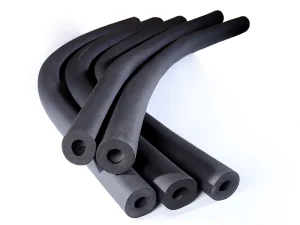
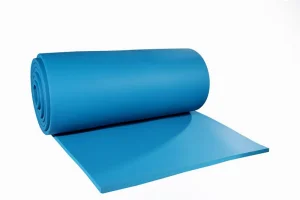
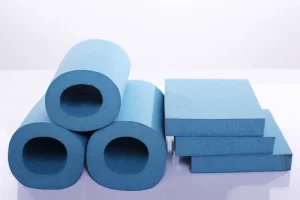
Review the physical property limitations and parameters for Kingflex Black Rubber Foam products.
| Property | NBR/PVC Elastomeric Foam Sheet | NBR/PVC Elastomeric Foam Pipe | Test Standard Reference |
|---|---|---|---|
| Service Temp. Range | -40℃ to 105℃ (Standard range; Special cryogenic blends support down to -200℃) | -40℃ to 105℃ (Standard range; Cryogenic options down to -200℃) | EN 14706 / ASTM C534 |
| Nominal Density | 40 - 55 kg/m³ | 40 - 55 kg/m³ | ASTM D1622 |
| Thermal Conductivity | $\le 0.034$ W/(m·K) at 0℃ | $\le 0.034$ W/(m·K) at 0℃ | ASTM C177 / EN 12667 |
| Water Vapor Permeability | $\mu$-factor $\ge 10,000$ (very high moisture vapor resistance) | $\mu$-factor $\ge 10,000$ (very high moisture vapor resistance) | EN 12086 / ASTM E96 |
| Flame Retardancy | Class 0 / Class 1 (highly resistant to flame spread) | Class 0 / Class 1 (highly resistant to flame spread) | BS 476 Part 6 & 7 / UL 94 V-0 |
| Compression Resilience | Over 80% recovery under standard deflection | Over 80% recovery under standard deflection | ASTM D1056 |
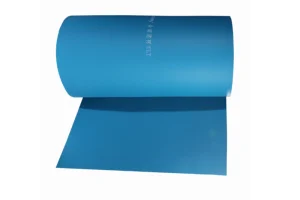
| Thickness Availability | 6mm to 50mm sheet rolls | 9mm to 40mm thickness (ID: 6mm - 114mm) | Manufacturer standard |
Pioneering eco-friendly chemistry, thermal optimization, and IoT structural monitoring.
Global environmental regulations require a rapid phase-out of high-global-warming-potential blowing agents. Kingflex is transitioning to next-generation CO₂ and water-blown foaming technologies. This ensures zero Ozone Depletion Potential (ODP) and negligible Global Warming Potential (GWP), aligning with modern green building and industrial compliance standards in Sri Lanka.
By embedding functional silica aerogels and graphene-based barriers into our NBR/PVC polymer matrices, we are pushing thermal conductivity down to unprecedented levels. This allows thinner insulation jackets to achieve the same thermal performance, saving precious installation space and reducing overall shipping weights.
Corrosion Under Insulation (CUI) remains a massive cost concern. The future belongs to smart systems. Our roadmap includes integrating thin, flexible moisture sensors inside the insulation layer. This allows plant managers to monitor moisture ingress wirelessly before it leads to system failure or pipeline pitting corrosion.
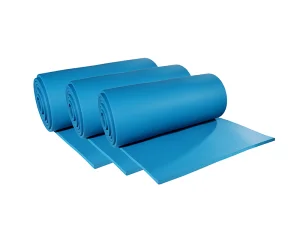
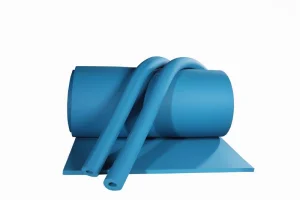
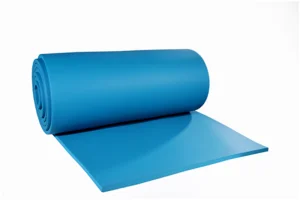
Direct supply of certified rubber foam and sheet rolls for industrial applications.
Detailed engineering answers to the most common questions regarding cryogenic closed-cell insulations.
It is mainly used for HVAC air ducts, refrigeration pipelines, building insulation systems, high-pressure steam distribution networks, and cryogenic pipelines in industrial environments (down to -200°C) to prevent thermal bridging and condensation.
Yes. Kingflex rubber foam is designed to meet strict Class 0 and Class 1 standards (BS 476 Part 6 & Part 7, CE, UL94 V-0). The material contains self-extinguishing properties that prevent flames from spreading along horizontal runs.
Rubber foam is a highly flexible, closed-cell material with an integrated vapor barrier. It is ideal for condensation mitigation and cryogenic lines. Rock wool features an open-fibrous structure. It offers excellent high-temperature and structural fire resistance, but requires external jacketing to prevent moisture absorption in cold processes.
Yes. Kingflex supports comprehensive OEM services, providing custom wall thicknesses, inner diameters (ID), density ranges, and specialized protective skins to meet custom project specifications.
Kingflex products comply with BS 476, CE EN 14304, REACH chemical safety regulations, RoHS directives, UL94 flame testing, and ASTM testing methods (such as ASTM C534 and ASTM C177), ensuring compatibility with global standards.
Yes. We keep complete records of all raw material formulation parameters, heat logs, and curing times. Every single roll and tube can be traced back to its specific production run for quality control purposes.
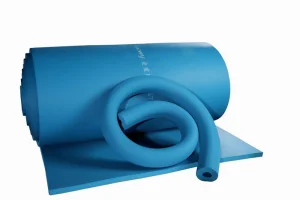
Our sheet rolls are available in standard thicknesses from 6mm to 50mm, which can be layered to meet demanding cryogenic thermal resistance requirements.
Under standard operational environments, a properly designed and installed Kingflex system lasts between 10 to 15 years, maintaining its physical shape and thermal insulating properties.
Proven reliability across large-scale energy projects, commercial complexes, and industrial systems.
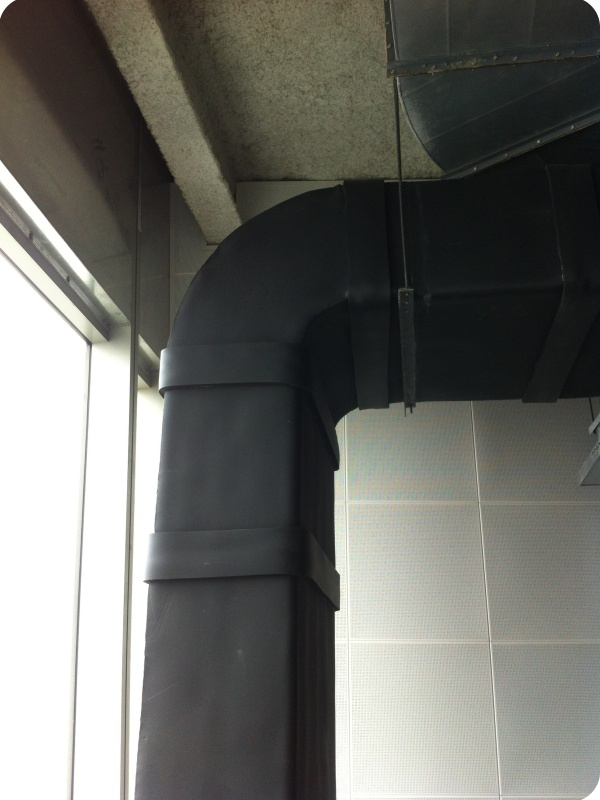
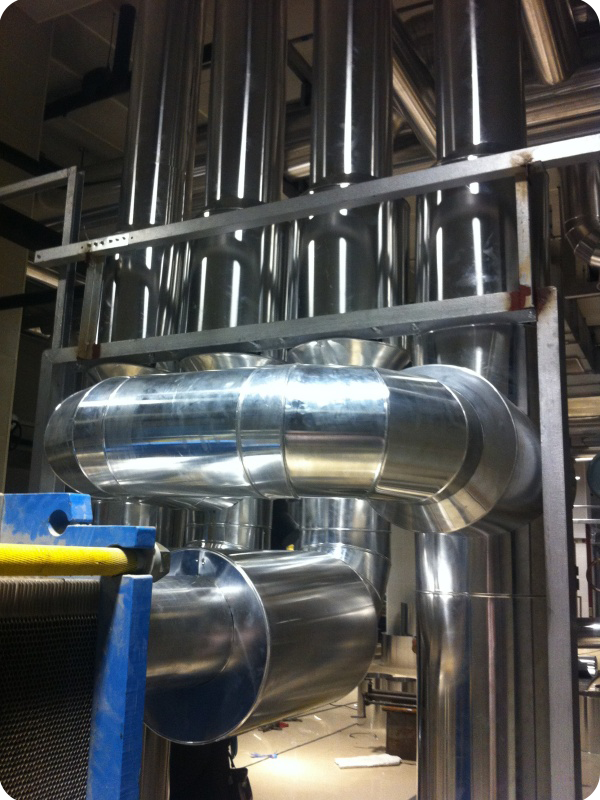
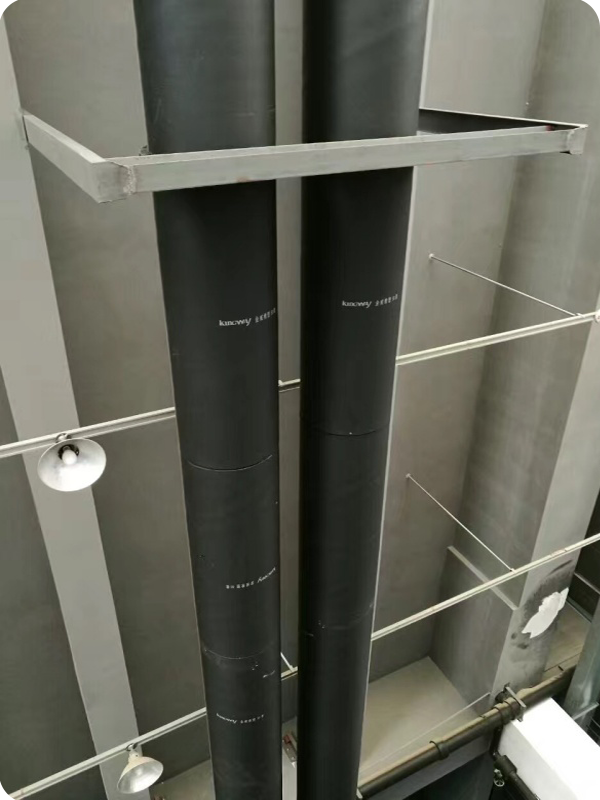
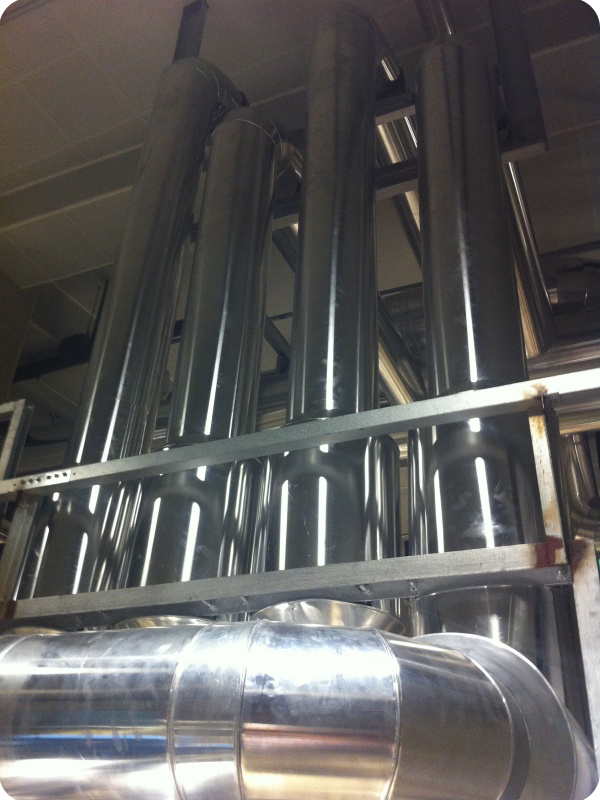
Ensuring quality and reliability from our production lines to your job site.
Importing industrial goods into Sri Lanka requires conforming to specific technical codes and import standards. Kingflex provides all necessary documentation, including certificate of origin, chemical testing sheets, fire safety approvals, and mechanical compliance certificates. Our logistics team handles international ocean shipping directly to the Port of Colombo, ensuring your project timeline stays on track.
We work closely with local engineering consultants to confirm that every shipment of rubber foam insulation matches the insulation thickness calculations (calculated using standard heat transfer algorithms like ISO 12241). This prevents condensation under tropical conditions and optimizes thermal insulation efficiency.
Looking for reliable thermal and cold insulation systems in Sri Lanka? Contact our technical team today for physical samples, custom density calculations, and price lists.