1 / 1
 Kingflex


No need for moisture barriers
Maintains flexibility at very low temperatures down to -200℃ to +125℃
No need for expansion joints
Low thermal conductivity
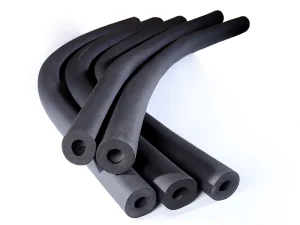
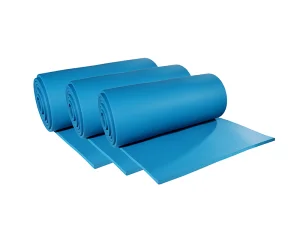
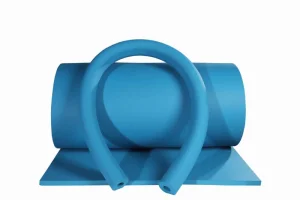
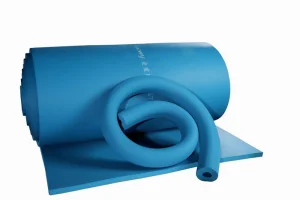
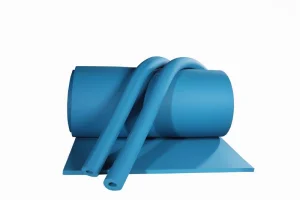
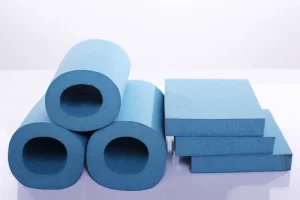
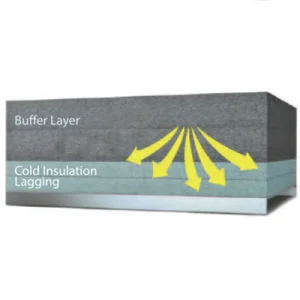
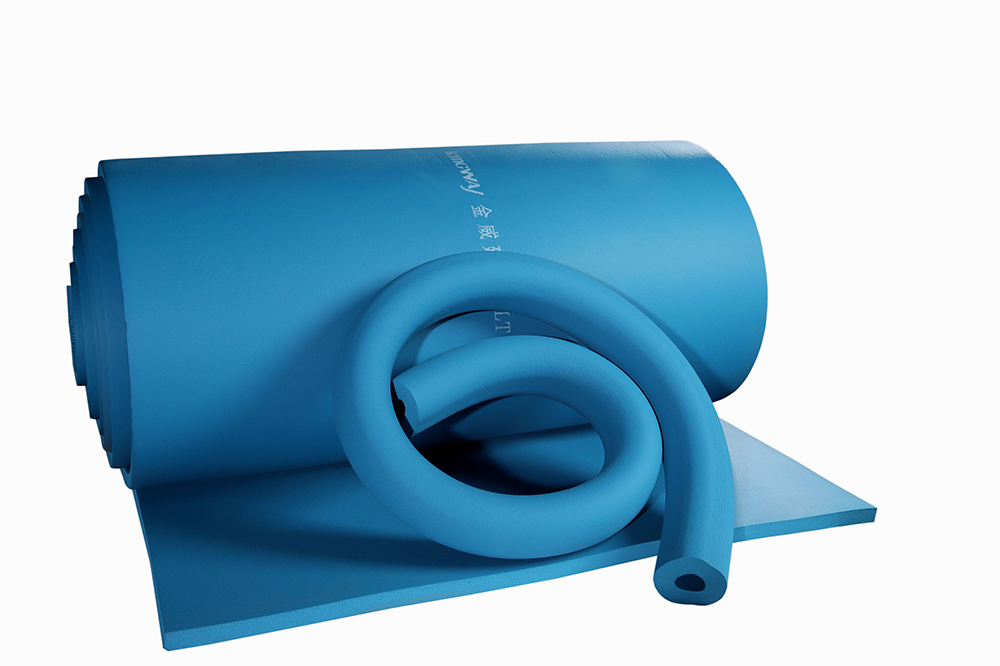
These are flexible, closed-cell, rubber foams based on dienes rubber. Flexible elastomeric foams exhibit such a high resistance to the passage of water vapour that they do not generally require additional water-vapour barriers. Such high vapour resistance, combined with the high surface emissivity of rubber, allows flexible elastomeric foams to prevent surface condensation formation with comparatively small thicknesses.

| Product Dimensions | |||
|---|---|---|---|
| Inches | mm | Size (L * W) | ㎡ / Roll |
| 3/4" | 20 | 10 × 1 | 10 |
| 1" | 25 | 8 × 1 | 8 |
| Main Property | Base material | Standard / Test Method | |
|---|---|---|---|
| ULT Grade | LT Grade | ||
| Thermal Conductivity | -100°C, 0.028 -165°C, 0.021 |
0°C, 0.033 -50°C, 0.028 |
ASTM C177 |
| Density Range | 60-80 Kg/m³ | 40-60 Kg/m³ | ASTM D1622 |
| Recommend Operation Temp. | -200°C to 125°C | -50°C to 105°C | - |
| Percentage Of Close Areas | >95% | >95% | ASTM D2856 |
| Moisture Performance Factor | NA | <1.96x10g(m.m.Pa) | ASTM E 96 |
| Wet resistance Factor | NA | >10000 | EN12086 EN13469 |
| Water Vapor Permeability | NA | 0.0039g/h.m² (25mm thickness) |
ASTM E 96 |
| PH | ≥8.0 | ≥8.0 | ASTM C871 |
| Tensile Strength Mpa | -100°C, 0.30 -165°C, 0.25 |
0°C, 0.15 -50°C, 0.218 |
ASTM D1623 |
| Compressive Strength Mpa | -100°C, ≤0.3 | -40°C, ≤0.16 | ASTM D1621 |

No. These flexible, closed-cell rubber foams exhibit exceptionally high resistance to water vapor transmission, preventing surface condensation without needing additional water-vapor barriers.
The ULT Grade operates optimally in extreme low-temperature environments from -200°C to 125°C, while the LT Grade is recommended for temperatures from -50°C to 105°C.
Thanks to the inherently flexible, closed-cell structure of the dienes rubber foam, the material naturally accommodates thermal contraction and expansion, eliminating the need for expansion joints.
Both the ULT and LT grades feature a closed-cell ratio exceeding 95% (tested under ASTM D2856), ensuring superior thermal performance and moisture resistance.
According to ASTM C177 standards, the thermal conductivity remains highly efficient. For example, the ULT Grade measures at 0.021 W/m·K at -165°C, while the LT Grade measures at 0.033 W/m·K at 0°C.