Kingflex Kingflex

Wholesale Flexible Rubber Insulation For Cryogenic System Supplier, Quotes

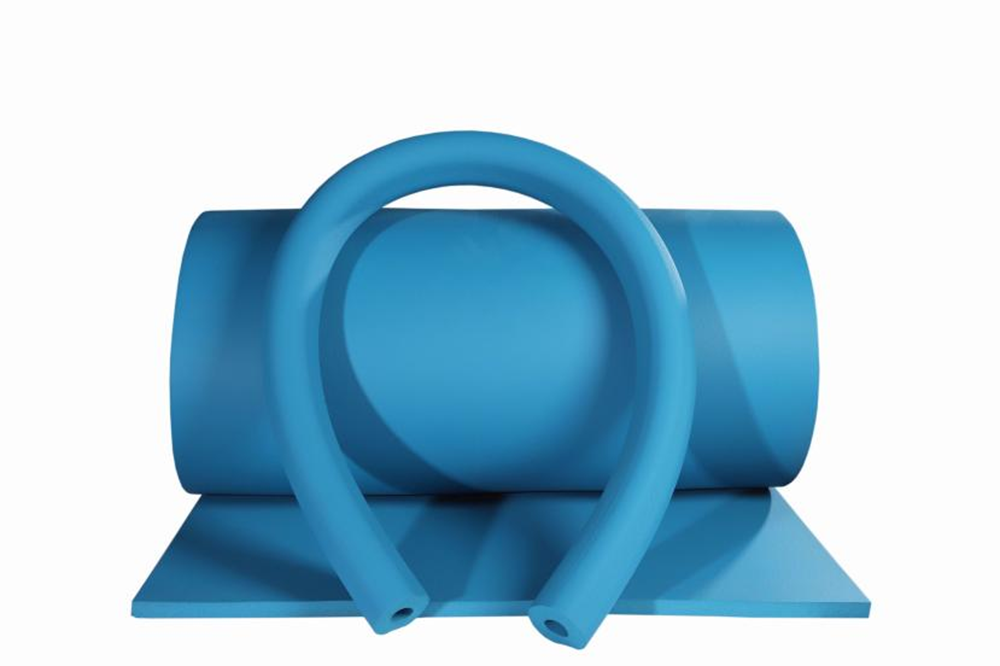
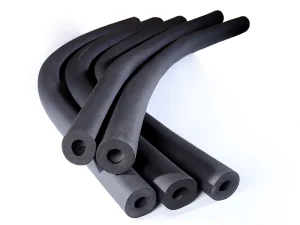
The ultra-low temperature protection system of diolefin and butadiene rubber is a high-performance elastic foaming developed by us specifically for the insulation project under ultra-low temperature conditions.Reducing temperature variation stress is one of the important features of the system over traditional rigid foam insulation materials such as foam glass, polyurethane PIR and PUR.

Product Description

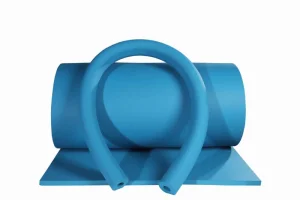
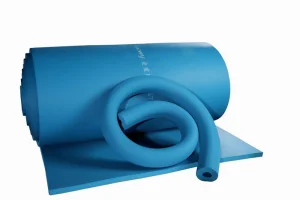
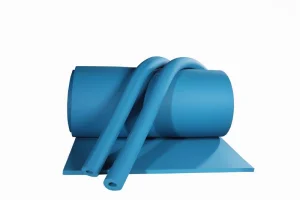
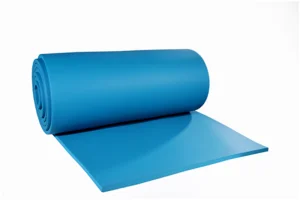
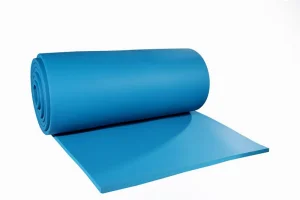
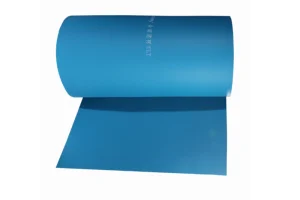
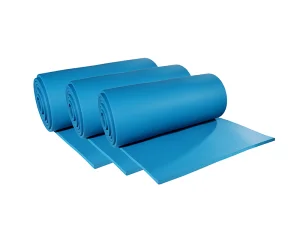
Cryogenic Rubber Foam Insulation Specimen
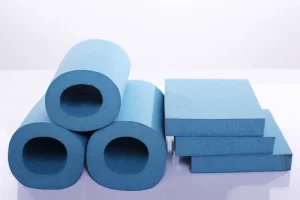
Cryogenic Foam Detail View
Insulation Performance Test
  • Insulation that maintains its flexibility at very low temperatures down to -200℃ to +125℃
  • Reduces the risk of crack development and propagation.
  • Reduces the risk of corrosion under insulation
  • Protects against mechanical impact and shock
  • Low thermal conductivity

Cryogenic Rubber Foam is a reliable and effective solution for insulation in extreme cold environments. Its versatility, durability, and insulation properties make it a top choice for a wide range of industrial and commercial applications.

Cryogenic Hose Application
Industrial Facility Pipe Insulation
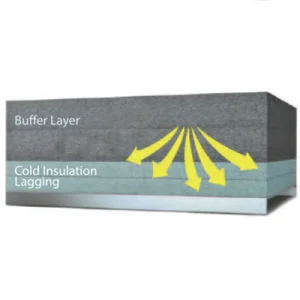
Thermal Insulation Structure
Insulated Pipeline Close-up
Foam Material Measurement
Storage Tank Insulation
Pipeline Wrapping Installation
Dimension Table
Inches mm Size (L*W) ㎡ / Roll
3/4" 20 10 × 1 10
1" 25 8 × 1 8
Property Base material Test Method
ULT Grade LT Grade
Thermal Conductivity -100°C, 0.028
-165°C, 0.021
0°C, 0.033
-50°C, 0.028
ASTM C177
Density Range 60-80Kg/m³ 40-60Kg/m³ ASTM D1622
Recommend Operation Temperature -200°C to 125°C -50°C to 105°C -
Percentage Of Close Areas >95% >95% ASTM D2856
Moisture Performance Factor NA <1.96x10 g(m.m.Pa) ASTM E 96
Wet resistance Factor μ NA >10000 EN12086
EN13469
Water Vapor Permeability Coefficient NA 0.0039g/h.m²
(25mm thickness)
ASTM E 96
PH ≥8.0 ≥8.0 ASTM C871
Tensile Strength Mpa -100°C, 0.30
-165°C, 0.25
0°C, 0.15
-50°C, 0.218
ASTM D1623
Compressive Strength Mpa -100°C, ≤0.3 -40°C, ≤0.16 ASTM D1621
Thermal Shock Test Result
Flexibility Under Cryogenic Conditions

Growth in the construction industry and many other industrial segments, combined with concerns over rising energy costs and noise pollution, is fueling market demand for thermal insulation. With more than four decades of dedicated experience in manufacturing and applications, our insulation solutions are riding on top of the wave.
Frequently Asked Questions

What is the operating temperature range of Cryogenic Rubber Foam?
The ULT Grade supports an operating temperature range of -200°C to 125°C, making it suitable for extremely cold industrial applications. The LT Grade is optimized for temperature ranges between -50°C to 105°C.
How does the material prevent corrosion under insulation (CUI)?
It features a high percentage of close areas (greater than 95%), which creates a robust barrier against moisture and vapor transmission, effectively minimizing the risk of corrosion under insulation.
What are the primary benefits of using Cryogenic Rubber Foam?
Key benefits include maintaining flexibility at very low temperatures down to -200°C, lowering the risk of crack development, protecting systems against mechanical impact/shocks, and providing very low thermal conductivity.
What is the typical density range for these insulation materials?
The density varies by grade: the ULT Grade operates with a density of 60-80Kg/m³, whereas the LT Grade operates within a range of 40-60Kg/m³.
Is the material resistant to chemical degradation and corrosion?
Yes, both the ULT and LT Grades maintain a pH value of ≥8.0 (tested via ASTM C871), ensuring chemical compatibility and neutralizing acidic substances to prevent chemical corrosion.

Related Products