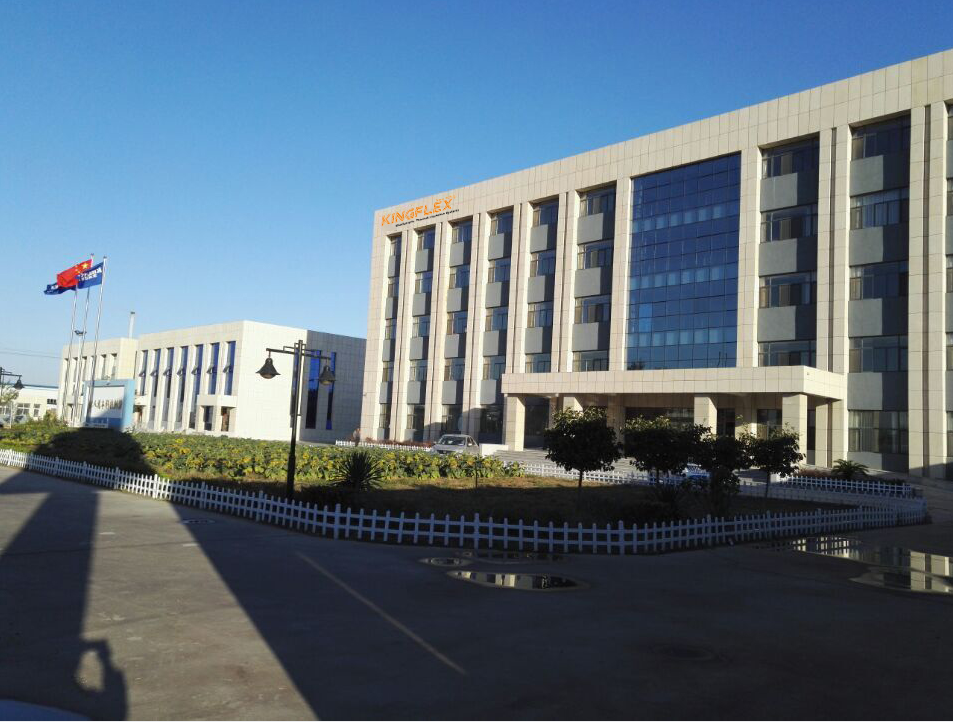
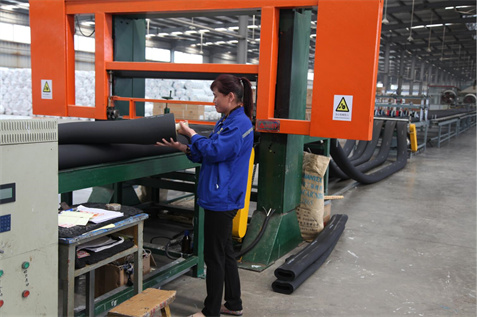
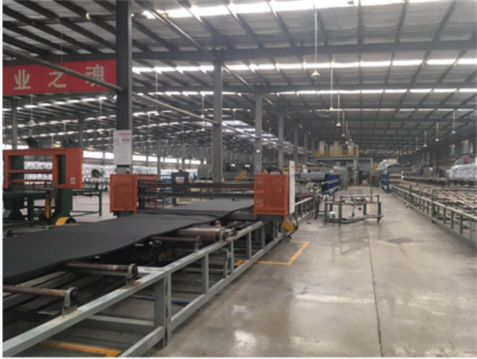
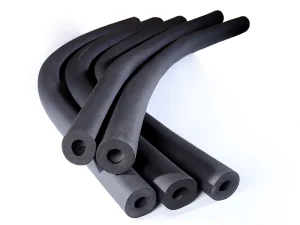
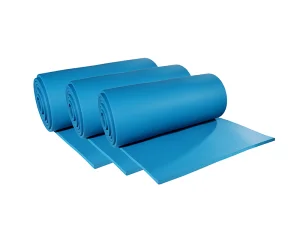
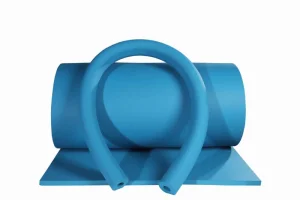
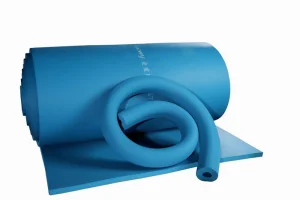
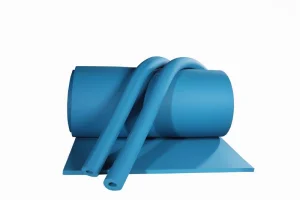
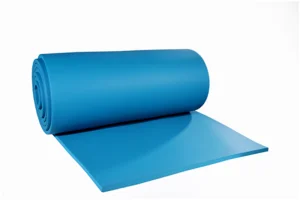
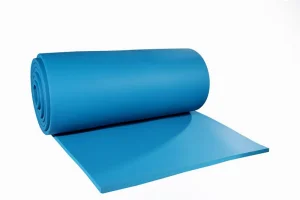
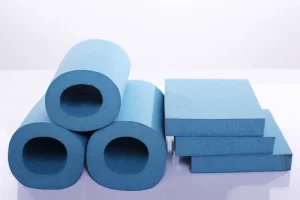
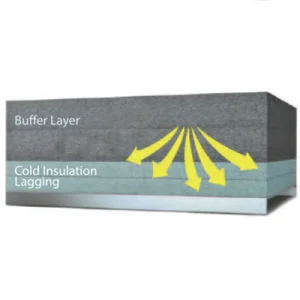
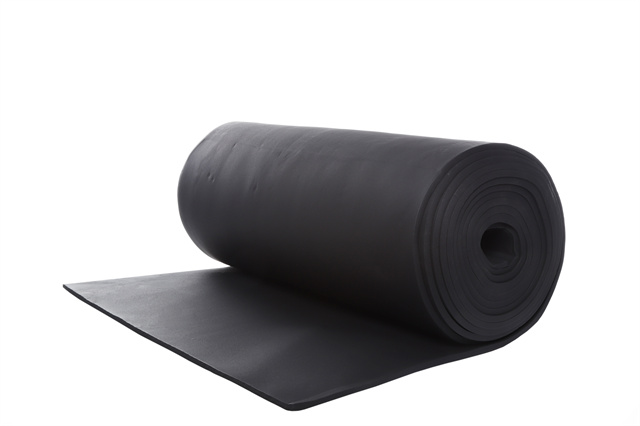
Rubber plastic foaming thermal insulation materials are produced by the cutting-edge technology introduced from abroad and the automatic production line, with nitrile-Butadiene rubber (NBR)and polyvinyl chloride(PVC) in excellent performances as the main materials and via special processes of ban burying, sulfuration, foaming, etc.
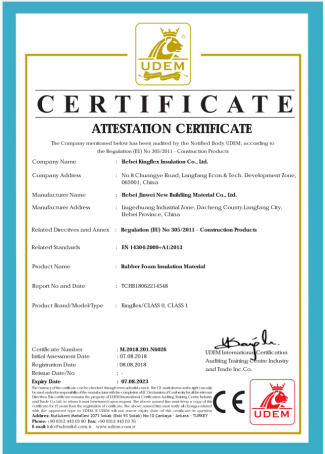
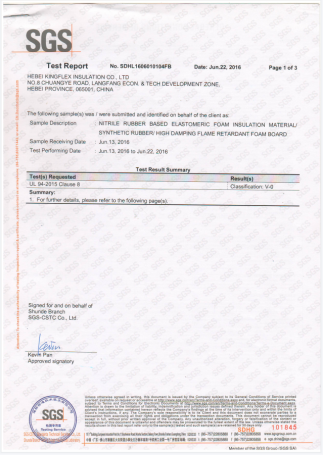
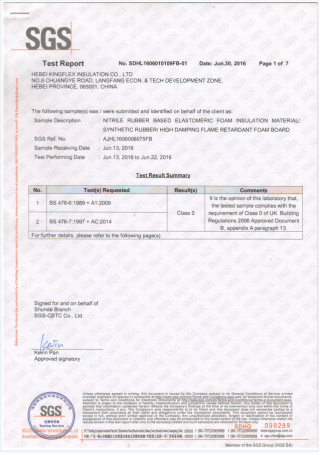
The rubber foam Rolls and Sheets comply with extremely stringent safety and fire resistance standards. With a constant endeavor to consistently improve quality, technological integrity, and outstanding performance, the product is designed to be both efficient and effectual.
Technical Data
Property
Unit
Value
Test Method
Temperature range
°C
(-50 - 110)
GB/T 17794-1999
Density range
Kg/m3
45-65Kg/m3
ASTM D1667
Water vapor permeability
Kg/(m.s.pa)
≤0.91×10⁻¹³
DIN 52 615 / BS 4370 Part 2 1973
μ
-
≥10000
-
Thermal Conductivity
W/(m.k)
≤0.030 (-20°C)
ASTM C 518
≤0.032 (0°C)
≤0.036 (40°C)
Fire Rating
-
Class 0 & Class 1
BS 476 Part 6 part 7
Flame Spread and Smoke Developed Index
-
25/50
ASTM E 84
Oxygen Index
-
≥36
GB/T 2406, ISO4589
Water Absorption, % by Volume
%
20%
ASTM C 209
Dimension Stability
-
≤5
ASTM C534
Fungi resistance
-
Good
ASTM 21
Ozone resistance
-
Good
GB/T 7762-1987
Resistance to U.V. and weather
-
Good
ASTM G23
Frequently Asked Questions
What are the main benefits of rubber foam insulation rolls and sheets?
Rubber foam insulation offers key advantages including easy installation, outstanding moisture resistance, and a closed-cell structure that effectively blocks thermal conduction. It is also manufactured cleanly without the use of CFCs or HCFCs.
How does the closed-cell structure prevent thermal conduction?
The closed-cell structure traps tiny pockets of air, restricting air movement and minimizing heat transfer. It achieves low thermal conductivity, varying from ≤0.030 W/(m.k) at -20°C to ≤0.036 W/(m.k) at 40°C.
What temperature range can this insulation material withstand?
Our insulation material is designed to operate safely within a broad temperature range from -50°C to 110°C, making it highly versatile for various piping and equipment applications.
What fire safety standard credentials does the material possess?
The materials are tested under strict criteria, achieving Class 0 & Class 1 fire ratings according to BS 476 Part 6 & 7 standards. It also meets the ASTM E 84 standard with a Flame Spread / Smoke Developed index of 25/50.
How resistant is the material to environmental factors like U.V. and mold?
According to specialized test methods (such as ASTM G23 for UV and ASTM 21 for fungi), this rubber foam material exhibits excellent (Good) resistance to mold, fungi, ozone, and weathering.
 Kingflex