1 / 1
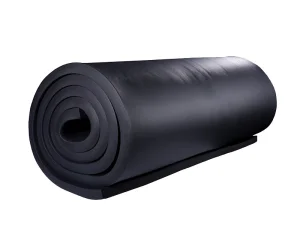
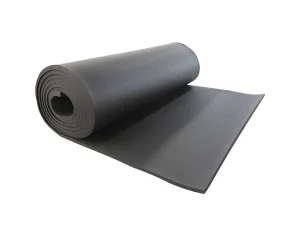
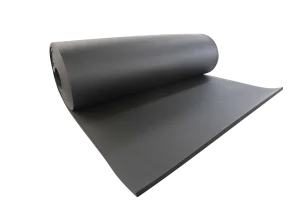
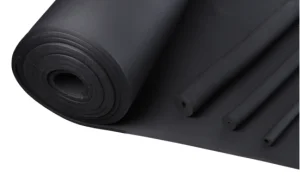
 Kingflex



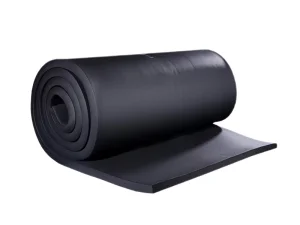
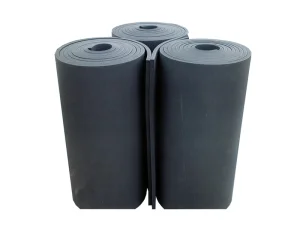
| Thickness | Width 1m | Width 1.2m | Width 1.5m | ||||
|---|---|---|---|---|---|---|---|
| Inches | mm | Size(L*W) | ㎡/Roll | Size(L*W) | ㎡/Roll | Size(L*W) | ㎡/Roll |
| 1/4" | 6 | 30 × 1 | 30 | 30 × 1.2 | 36 | 30 × 1.5 | 45 |
| 3/8" | 10 | 20 × 1 | 20 | 20 × 1.2 | 24 | 20 × 1.5 | 30 |
| 1/2" | 13 | 15 × 1 | 15 | 15 × 1.2 | 18 | 15 × 1.5 | 22.5 |
| 3/4" | 19 | 10 × 1 | 10 | 10 × 1.2 | 12 | 10 × 1.5 | 15 |
| 1" | 25 | 8 × 1 | 8 | 8 × 1.2 | 9.6 | 8 × 1.5 | 12 |
| 1 1/4" | 32 | 6 × 1 | 6 | 6 × 1.2 | 7.2 | 6 × 1.5 | 9 |
| 1 1/2" | 40 | 5 × 1 | 5 | 5 × 1.2 | 6 | 5 × 1.5 | 7.5 |
| 2" | 50 | 4 × 1 | 4 | 4 × 1.2 | 4.8 | 4 × 1.5 | 6 |
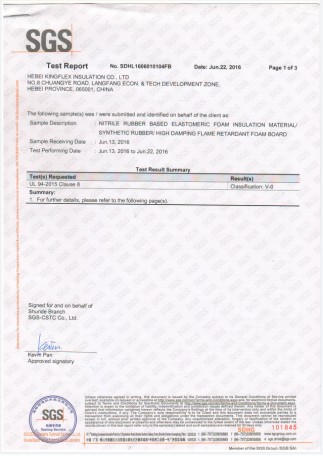

| Property | Unit | Value | Test Method |
|---|---|---|---|
| Temperature range | °C | (-50 - 110) | GB/T 17794-1999 |
| Density range | Kg/m3 | 45-65Kg/m3 | ASTM D1667 |
| Water vapor permeability | Kg/(m.s.pa) | ≤0.91×10 ﹣¹³ | DIN 52 615 / BS 4370 Part 2 1973 |
| μ | - | ≥10000 | - |
| Thermal Conductivity | W/(m.k) | ≤0.030 (-20°C) | ASTM C 518 |
| ≤0.032 (0°C) | |||
| ≤0.036 (40°C) | |||
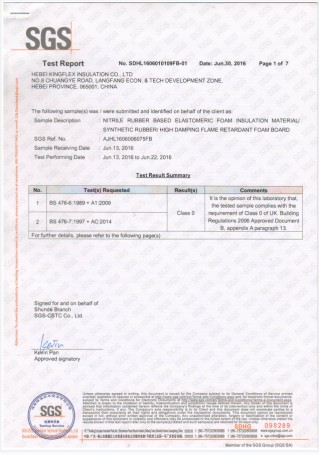
| Fire Rating | - | Class 0 & Class 1 | BS 476 Part 6 part 7 |
| Flame Spread and Smoke Developed Index | - | 25/50 | ASTM E 84 |
| Oxygen Index | - | ≥36 | GB/T 2406, ISO4589 |
| Water Absorption, %by Volume | % | 20% | ASTM C 209 |
| Dimension Stability | - | ≤5 | ASTM C534 |
| Fungi resistance | - | Good | ASTM 21 |
| Ozone resistance | Good | GB/T 7762-1987 | |
| Resistance to U.V. and weather | Good | ASTM G23 |
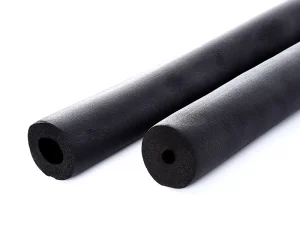
Condensation Control: The elastomeric, nitrile rubber foam pipe insulation prevents condensation on refrigeration copper piping, heating and ventilation pipework, and air-conditioning pipework.
Versatile Applications: There isn’t much nitrile rubber foam pipe lagging cannot do for you. When insulated properly and when working within its claimed temperature range, the rubber foam lagging saves energy loss in both hot and cold plumbing lines, as well as a ducting insulation blanket.
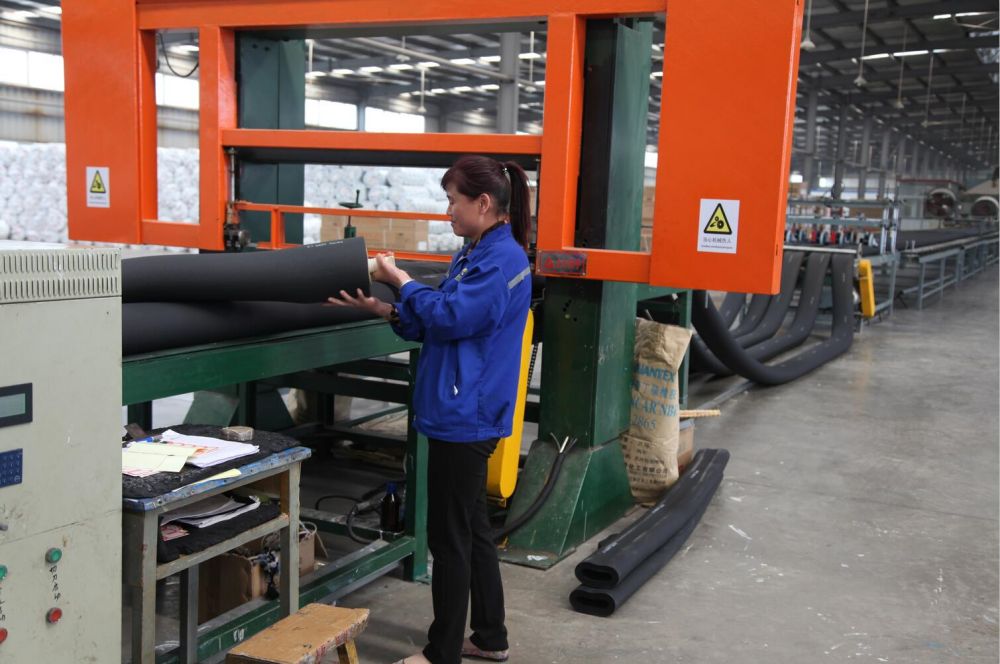
The rubber foam pipe lagging is resistant to water vapour and offers excellent adhesion to adhesives and coatings. The insulation is easy to cut, carry and install. Installing nitrile rubber lagging on pipes is an easy DIY task. It significantly reduces energy costs and operates efficiently in a wide temperature range -50 °C to +110 °C. The nitrile rubber pipe insulation increases the life of your plumbing in industrial, commercial and residential applications. They are cost-effective, easy to install and highly flexible.
What is nitrile rubber pipe insulation made of?
The nitrile rubber pipe insulation is made of nitrile rubber or Buna R, a most commonly used elastomer. Nitrile rubber consists of unsaturated copolymers of acrylonitrile and butadiene monomers. The chemical and physical properties of nitrile rubber vary based on the polymer makeup.
NBR/PVC and EPDM Insulation Comparison:
Closed cell elastomeric insulation, also known as rubber, has been commercially available for almost 70 years. It’s commonly specified to insulate below-ambient (cold) mechanical systems such as HVAC, VRF/VRV, refrigeration, chilled water, medical gas, and cold water plumbing piping.
For the choice in building materials, analysis and comparisons are vital to make a correct product selection. Whether you are choosing cladding material for a skyscraper, or an insulation product for an HVAC or plumbing system, ensuring application and building codes requirements are met is crucial to an effective and compliant install. Variables like temperature, density, water permeability, or UV resistance can all impact a successful project selection.
In the mechanical insulation arena, options exist for almost every application and need. There are two of the most common elastomeric insulation materials for HVAC, chilled water, and refrigeration systems based on nitrile butadiene rubber (NBR) and ethylene propylene diene monomer rubber (EPDM) technology. Both of these elastomeric foams are flexible, closed cell, and have a high resistance to moisture and water ingress. In fact, their water permeability is so low that they do not generally require additional water-vapor retarders. Also, with such high vapor resistance and surface emissivity, these elastomeric foams do an excellent job at preventing surface condensation formation.
Different Strengths and different Applications:
Even though NBR and EPDM seem to be similar, there are some key differences. NBR is a non-aromatic polymer compound, whereas EPDM is an aromatic polymer. Moreover, NBR is made using acrylonitrile and butadiene monomers, while EPDM is made using ethylene, propylene and a diene comonomer. Another significant difference in terms of application, is that NBR has a temperature range of -40°F to 180°F, while EPDM has a wider operating temperature range of -65°F to 250°F.
NBR stands alone as the most oil- and fuel-resistant elastomer. It is also known for maintaining its stability in low temperatures. On the other hand, EPDM is a heat, ozone, and UV-resistant rubber that has a great tensile strength, aging resistance, and abrasion resistance, as well as having a lower smoke density with average flame development especially at 1-1/2 and 2” thicknesses.
Both rubber cellular foam insulation products are proven alternatives to fiberglass on HVAC, chilled water, and refrigerant systems (piping, pumps, tanks, vessels, and spheres) due to its hydrophobic chemical composition, closed-cell structure, and built-in vapor retarders.