 Kingflex
Kingflex
Kingflex
High-performance insulation materials tailored to meet strict AS/NZS thermal and safety standards.
New Zealand's commercial and industrial building sector is undergoing a massive transformation. With the recent updates to the New Zealand Building Code (NZBC) Clause H1 (Energy Efficiency), developers and HVAC designers are under pressure to achieve higher thermal performance targets while minimizing the overall carbon footprint of mechanical installations. Closed-cell rubber foam insulation (Flexible Elastomeric Foam, or FEF) has emerged as the system of choice for modern architecture across Auckland, Wellington, and Christchurch.
New Zealand’s unique marine climate, characterized by high relative humidity and fluctuating coastal temperatures, presents a continuous risk of condensation on chilled water pipes and HVAC ductwork. If left unchecked, moisture accumulation leads to corrosion under insulation (CUI), mold growth, and a severe reduction in system thermal efficiency. Implementing premium NBR/PVC elastomeric rubber foam sheets ensures a permanent moisture barrier, maintaining thermal conductivity at a constant, reliable level ($\lambda \le 0.034$ W/m·K at 0°C).
From large-scale dairy processing facilities in Canterbury to multi-story commercial high-rises in Auckland, finding the balance between mechanical system efficiency and structural fire safety is critical. Designers must choose materials that strictly comply with local fire safety classifications, such as AS/NZS 1530.3, indicating low flame spread and minimal smoke development indexes. Kingflex meets this challenge by providing tested, certified products directly to New Zealand distributors and contractors.
Why mechanical consultants and acoustic engineers in New Zealand specify Kingflex Elastomeric Foam.
Delivers steady, low thermal conductivity across varying operational ranges, directly supporting thermal envelope goals in accordance with NZBC Clause H1 guidelines.
Features a closed-cell rate exceeding 98%. The built-in water vapor barrier eliminates the need for separate external jackets in indoor applications, reducing installation labor.
Strictly tested and formulated to meet international and regional fire propagation regulations (such as BS 476 and UL94), ensuring low flammability and self-extinguishing behavior.
From coastal humidity to sub-zero geothermal fields, our foam handles Aotearoa's toughest conditions.
1. Commercial HVAC Ducting & Mechanical Piping in Auckland: The City of Sails regularly deals with humid oceanic air. Condensation dripping from mechanical lines inside suspended ceilings can destroy drywall, ruin electrical systems, and impact indoor air quality. Kingflex closed-cell rubber sheet insulation prevents moisture contact with metal piping, maintaining a clean, dry, and energy-efficient installation.
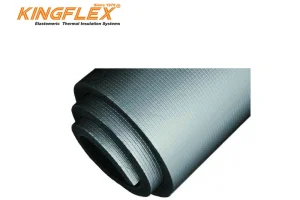
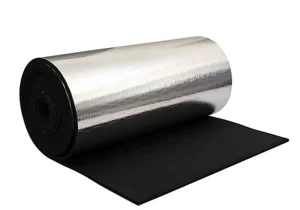
2. Cold Chain and Dairy Processing Plants in Canterbury & Waikato: New Zealand's dairy sector relies on massive refrigeration and cooling networks. Ammonia pipes and cold glycol systems run at extreme sub-zero temperatures. Standard fiberglass insulation simply cannot handle this thermal differential without moisture entry. Our flexible elastomeric foam sheets, especially variants clad with heavy-duty aluminum foil, offer the rugged protection and vapor resistance required in washdown environments.
"For dairy and beverage facilities, thermal control isn't just about saving power—it's about hygiene. NBR/PVC closed-cell rubber foam prevents organic bacterial build-up that thrives on damp insulation fiber, ensuring USDA-level sanitization compliance."
3. Geothermal & District Energy Systems in Rotorua & Taupo: High levels of ambient hydrogen sulfide ($H_2S$) and moisture require chemical-resistant coatings and vapor seals. NBR/PVC elastomer complexes show excellent ozone, weathering, and chemical resistance, guarding internal pipe systems against chemical stress corrosion cracking (CSCC) and outdoor degradation.
Decades of manufacturing expertise, delivering premium thermal solutions globally.
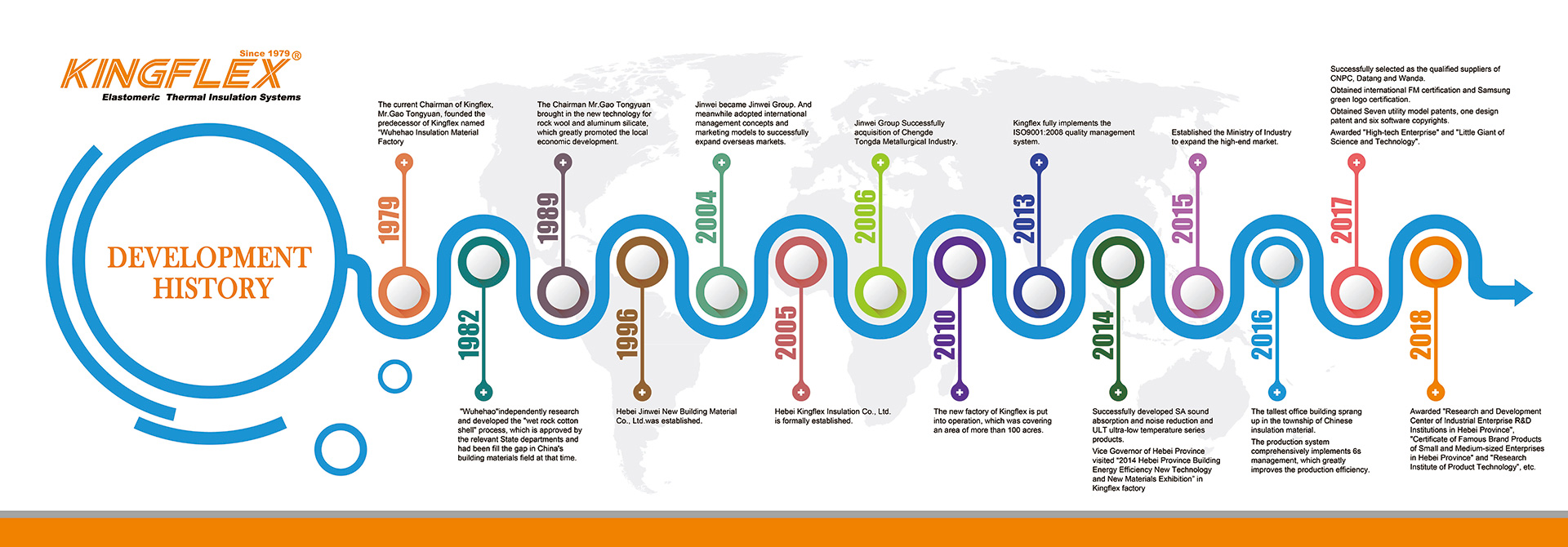
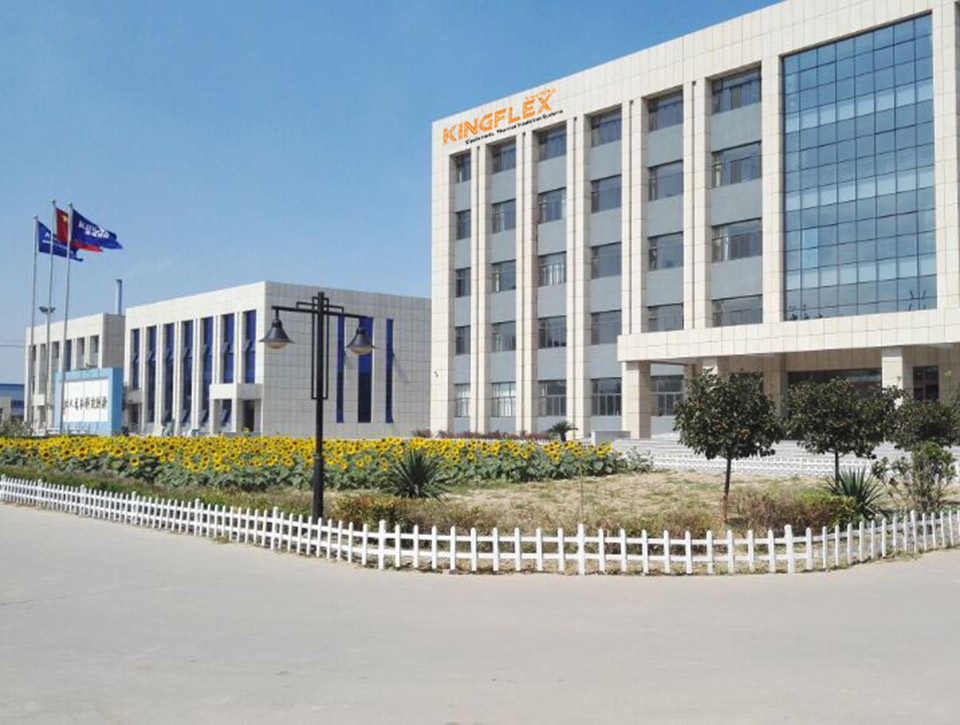
In a global market marked by shipping delays and volatile material costs, securing a direct connection with a leading manufacturer is essential for large-scale New Zealand construction projects. Kingflex Insulation operates five large-scale automated assembly lines in Dacheng, China—the recognized capital of green building materials. This enables a massive, steady output that can absorb large-scale commercial orders without causing bottlenecks in project timelines.
Our direct shipping routes connect major Chinese shipping ports with Auckland, Tauranga, and Lyttelton (Christchurch), ensuring consistent supply cycles. With dedicated QA/QC control procedures implemented at every phase—from raw NBR raw rubber polymer compounding to final foaming and curing—each roll of rubber foam is traced to its batch. This strict compliance satisfies New Zealand developers looking for reliable material traceability.
Understanding the engineering profiles and performance differences between NBR/PVC and alternative materials.
Historically, building designs in New Zealand utilized glass wool or PIR board for duct and pipe insulation. However, these choices have distinct drawbacks. Glass wool readily absorbs moisture when the outer barrier is punctured, resulting in a sudden drop in thermal resistivity. PIR boards, while high-performing, lack the flexible curvature needed for complex mechanical piping. Elastomeric NBR/PVC foam combines high flexibility with complete moisture resistance in a single, easy-to-install material layer.
Our engineering division continues to push the performance envelope. We are currently developing halogen-free formulations to meet strict environmental demands, alongside ultra-low smoke density variants to align with future green building design philosophies.
Detailed, technically verified information to assist engineers and buyers with procurement queries.
Our products are fully certified under BS 476 (Parts 6 & 7 Class 0/Class 1), CE, REACH, RoHS, UL94, and ASTM standards. This ensures compliance with structural fire safety, environmental safety, and thermal performance standards internationally and in the Oceania market.
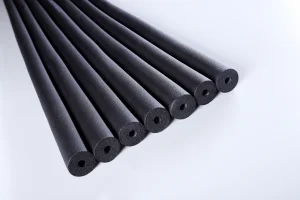
Yes. Kingflex rubber foam sheet and tube insulation provide the low thermal conductivity and high vapor diffusion resistance required to meet the R-value requirements of NZBC Clause H1 (Energy Efficiency) and the fire behavior indices under AS/NZS 1530.3.
When installed correctly in indoor settings, the material has a service life of 10 to 15 years. For outdoor systems in coastal areas, we recommend wrapping the foam sheets in aluminum foil-clad finishes to protect against UV and salty ocean winds.
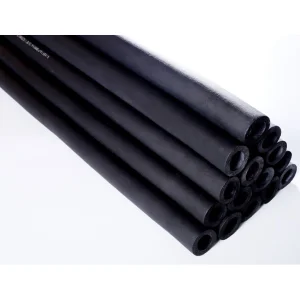
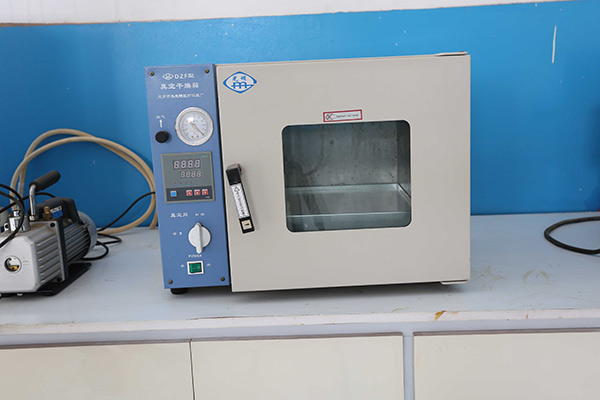
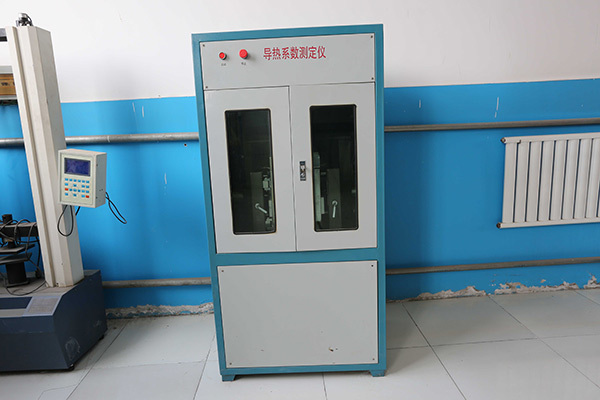
Every production batch undergoes automated compound verification, thickness checks, and expansion testing. This guarantees that all shipped sheets, rolls, and pipes carry full batch traceability from raw material compounding to dispatch.
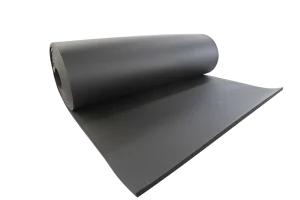
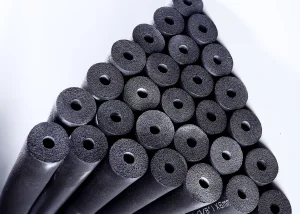
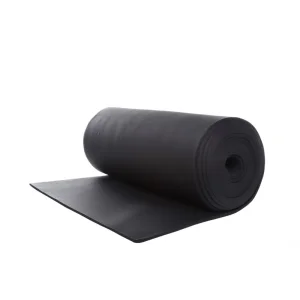
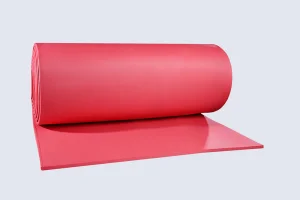
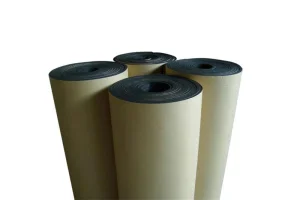
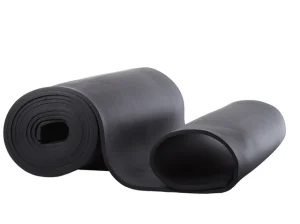
We manufacture rubber foam sheets in rolls or flat panels ranging from 6mm to 50mm in thickness. Standard dimensions can be customized via OEM services to align with specific project and mechanical design needs.
Yes. The flexible, elastomer cell matrix acts as an acoustic decoupling layer. It dampens structural vibrations in ducting and attenuates high-frequency air movement noise, assisting buildings in meeting local building code acoustics requirements (Clause G6).
A complete suite of insulation products engineered for diverse thermal control applications.
Decades of manufacturing expertise, delivering premium thermal solutions globally.
Established by the Jinwei Group, which carries over 40 years of industrial history since its founding in 1979, Kingflex has grown to become a leading manufacturer in China’s green building materials sector. In operation, Kingflex focuses on energy conservation and emission reduction as its core design principles. We deliver full-spectrum insulation solutions from raw material formulation and automated manufacturing to site-level installation guidance and post-sales technical support.
Our dedicated R&D division consists of 8 professional engineers, alongside 6 international sales consultants and 230 production staff. We operate 5 large-scale automated lines with an annual output capacity of over 600,000 cubic meters. As a certified manufacturer recognized by industrial agencies and chemical organizations worldwide, we continue to supply our insulation products to projects across 66 countries.