 Kingflex
Kingflex
Kingflex
Premium solutions for industrial acoustics, deep cryogenic applications, and structural thermal sealing.
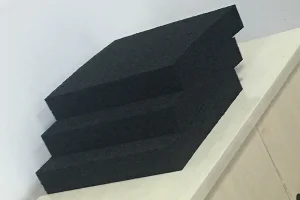
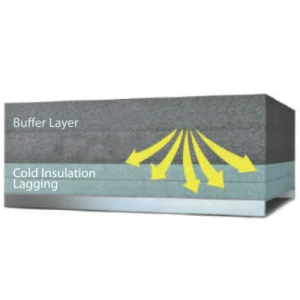
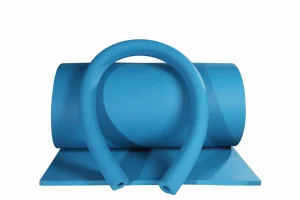
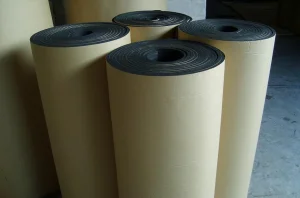
In modern industrial refrigeration, HVAC engineering, and high-performance building skins, the integrity of a thermal isolation envelope relies heavily on its weakest link. Thermal bridges, joint leakage, and moisture intrusion represent the primary failure vectors of elastomeric systems. Heavy-duty Aluminum Foil Insulation Tape acts as a physical vapor barrier, shielding underlying NBR/PVC elastomeric cores from UV exposure, humidity, and mechanical shear.
Kingflex Insulation Co., Ltd., drawing on over 40 years of manufacturing lineage through the Jinwei Group (founded in 1979), designs and exports fully integrated system solutions. By pairing high-tack acrylic adhesive aluminum tapes with our Class 0 elastomer materials, engineers achieve continuous vapor barrier protection and stable thermal conductivity values over decades-long operation cycles.
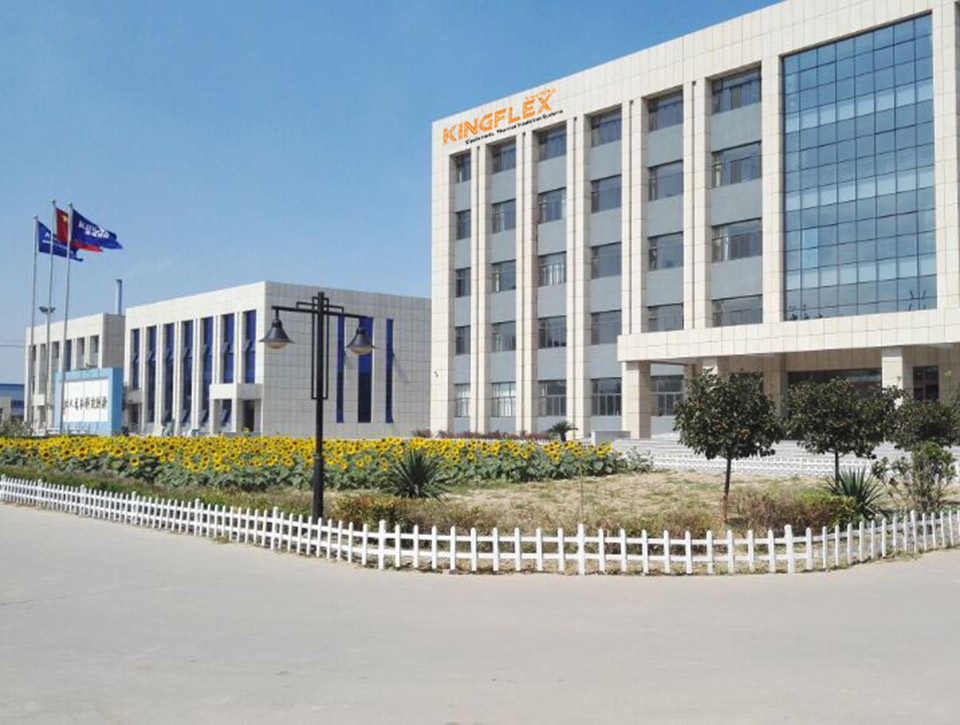
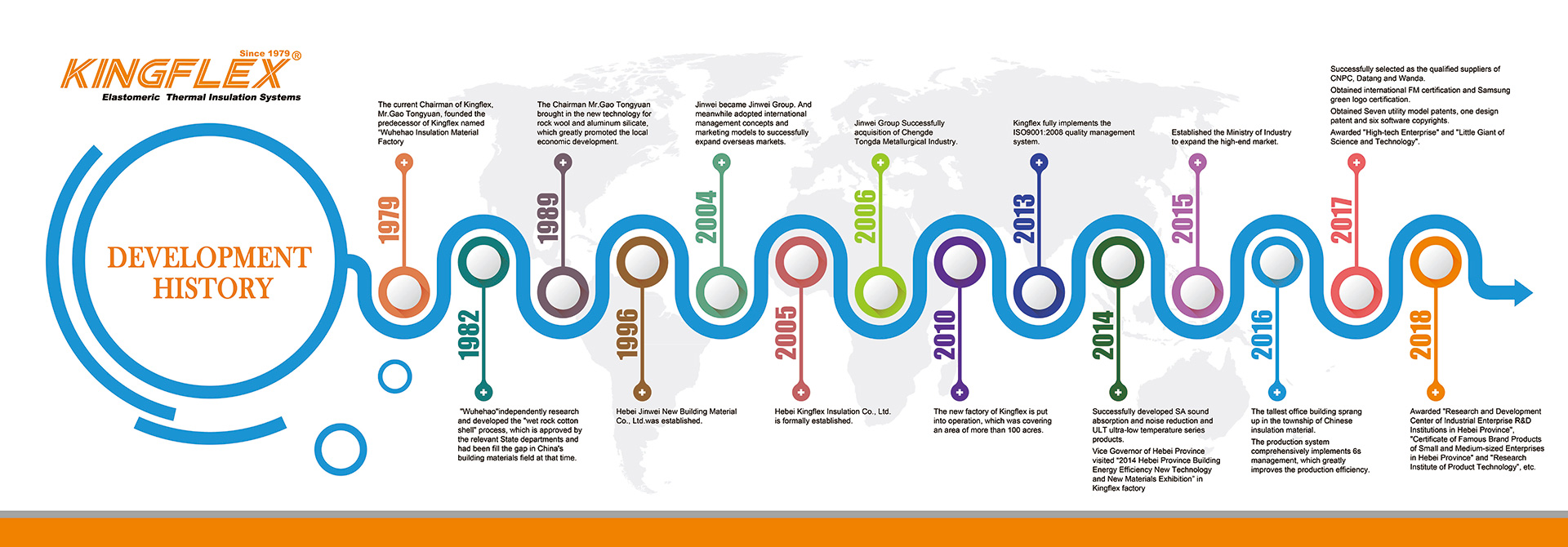
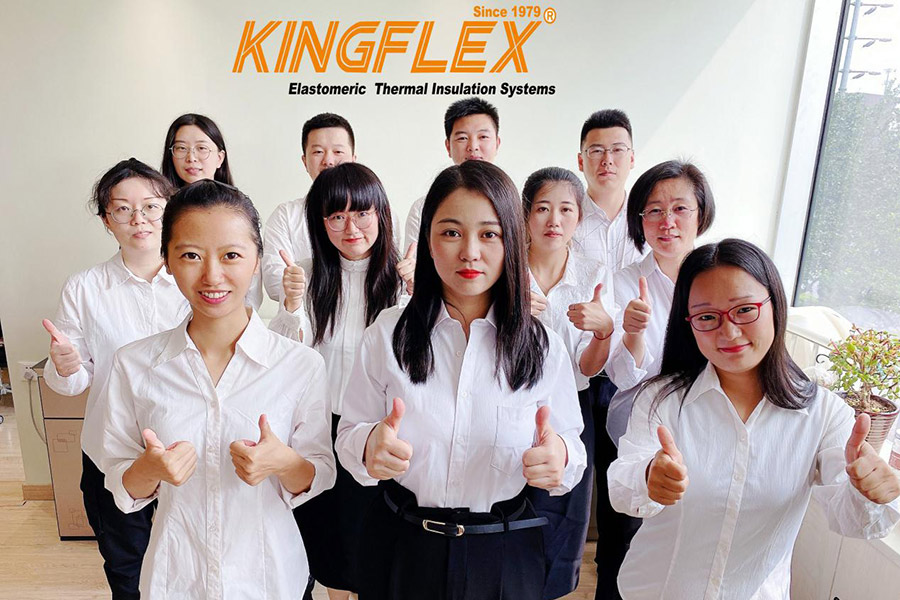
Founded by the Jinwei Group, the first thermal insulation manufacturer north of the Yangtze River, Kingflex has remained at the vanguard of the Chinese energy-saving materials sector. Operating from Dacheng, Hebei—the capital of green building materials in China—our current infrastructure comprises five advanced automatic assembly lines. We are designated as a strategic manufacturing partner by key domestic regulatory bodies, including the Ministry of Energy and the Ministry of Chemical Industry.
Our dedicated R&D division, featuring 8 professional materials science engineers, works in tandem with our international sales and support team of 6, supported by 230 production workers. Our system solutions are built around NBR/PVC matrix formulations that maintain physical flexibility at temperatures ranging from -40℃ to 105℃, ensuring structural resilience in extreme ambient climates.
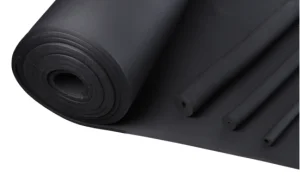
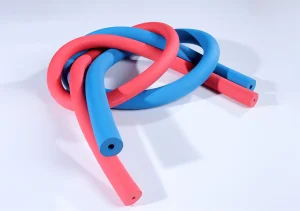
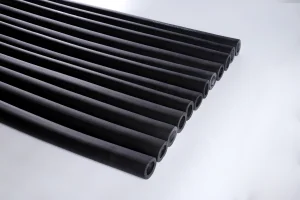
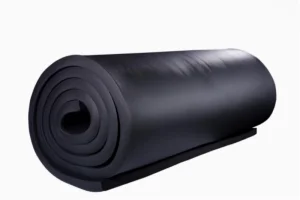
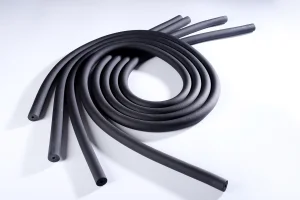
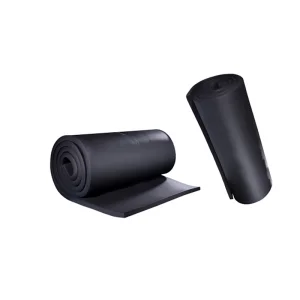
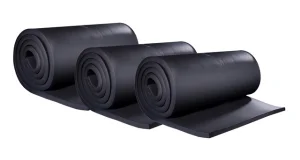
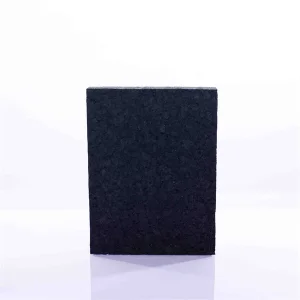
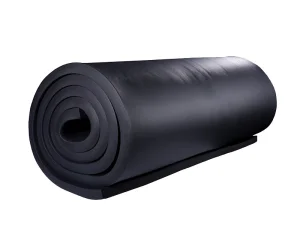
Physical parameters of Kingflex thermal insulation sheet rolls, elastomer tubes, and companion foil layers.
| Physical Metric | NBR/PVC Elastomeric Foam Sheet | NBR/PVC Insulation Pipe System | Aluminum Foil Cladding / Tape Component |
|---|---|---|---|
| Raw Core Material | Closed-Cell Nitrile Butadiene / PVC blend | Extruded Elastomeric NBR/PVC Compound | High-Tensile Aluminum Foil + Acrylic Adhesive |
| Operating Temperature | -40℃ to 105℃ (-40℉ to 221℉) | -40℃ to 105℃ (-40℉ to 221℉) | -35℃ to 120℃ (Stable adhesion range) |
| Density Limits | 40 - 55 kg/m³ | 40 - 55 kg/m³ | 70 - 90 g/m² (Foil weight index) |
| Available Thickness | 6mm to 50mm customizable | 9mm to 40mm (Internal Diam. 6mm-114mm) | 15 to 50 microns (Foil carrier thickness) |
| Fire Safety Ratings | BS 476 Part 7 Class 1, UL94 V-0 | BS 476 Part 6 & 7 Class 0 certified | Flame retardant, zero surface spread |
| Closed-Cell Rate | ≥ 98.2% structural encapsulation | ≥ 98.0% structural encapsulation | Impenetrable Vapor Shield (100% Barrier) |
Analyzing how regional demands dictate the integration of aluminum foil barriers and elastomeric systems.
Used to prevent thermal bridging and vapor leaks in commercial HVAC duct installations, particularly in high-humidity areas like Southeast Asia and the Gulf region.
Essential for ultra-low temperature LNG transport pipelines and cold storage installations. The combination of closed-cell foam and aluminum tape prevents atmospheric moisture condensation on cold surfaces.
Commonly applied in high-density data centers, cleanrooms, and medical facilities. Open-cell and closed-cell elastomer sheets are layered with foil to decouple structural sound transmission.
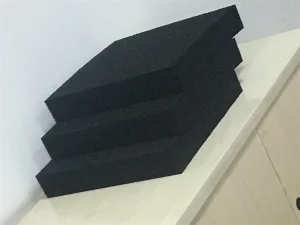
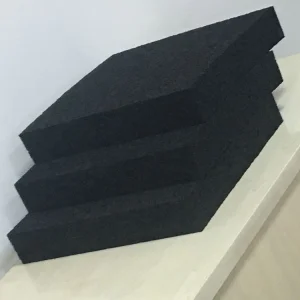
Standard density: 40-55 kg/m³. High compression resilience (over 80%). Engineered for larger flat surfaces, industrial tanks, and heavy-duty HVAC plenums.
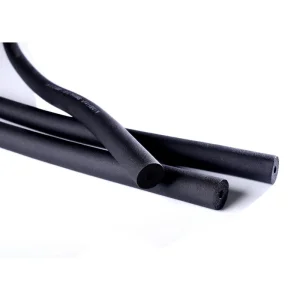
Standard Wall thickness from 9mm to 40mm. Designed for rapid slip-on or longitudinal slit installations over plumbing and industrial process pipelines.
By taping seam lines with matching high-performance aluminum foil tape, installers create a unified vapor seal, eliminating the risk of localized mold growth or ice accumulation.
Operating a continuous manufacturing footprint in Dacheng, China, allows Kingflex to leverage local industrial clusters, raw materials processing, and efficient shipping networks through Tianjin Port. This centralized production model minimizes shipping delays and helps insulate procurement partners from supply chain volatility.
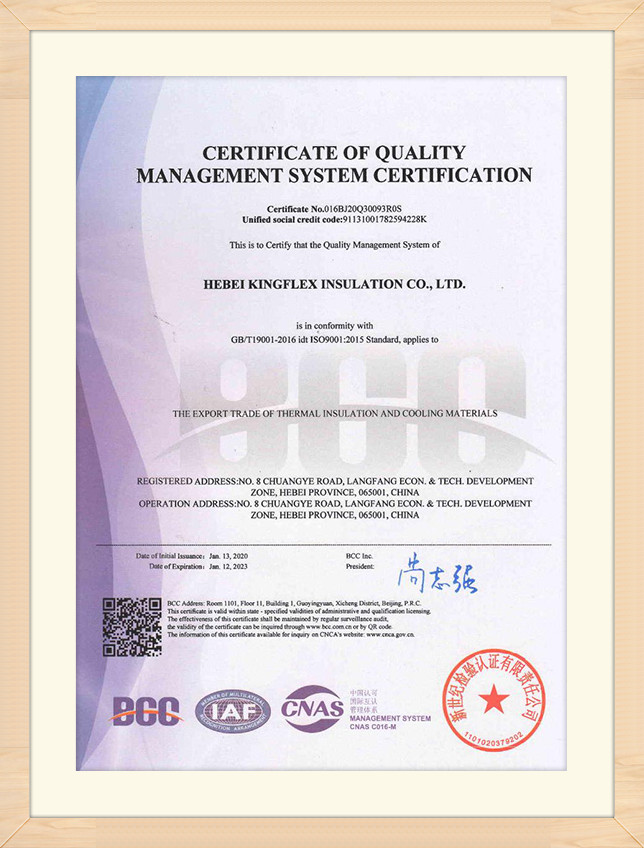
Our five high-volume automatic extrusion and vulcanization lines process NBR/PVC blends at scale, maintaining a consistent density profile across production runs. Kingflex holds certifications across various global quality frameworks, including BS 476, CE, REACH, RoHS, UL94, and ASTM, helping ensure product compliance for international projects.
Our Quality Management System oversees all production phases, from raw elastomer mixing to the formulation of acrylic adhesives used on our foil insulation tapes. This end-to-end oversight ensures reliable adhesion performance in high-stress, variable-temperature environments.
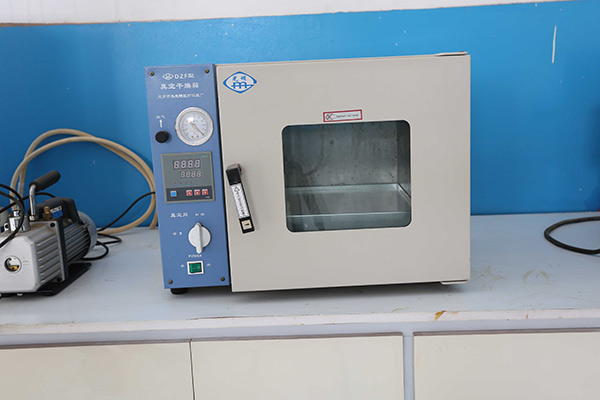
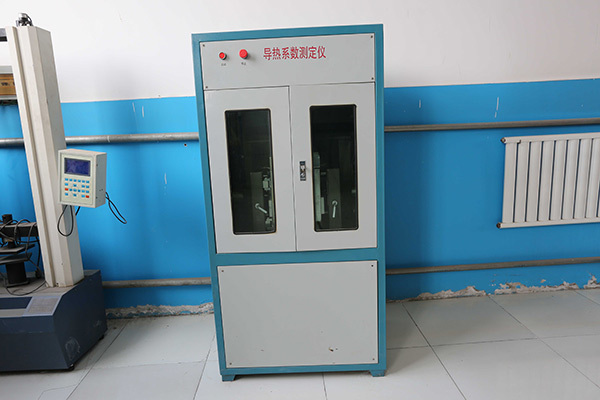
Independent laboratory validation and internal testing facilities supporting our products.

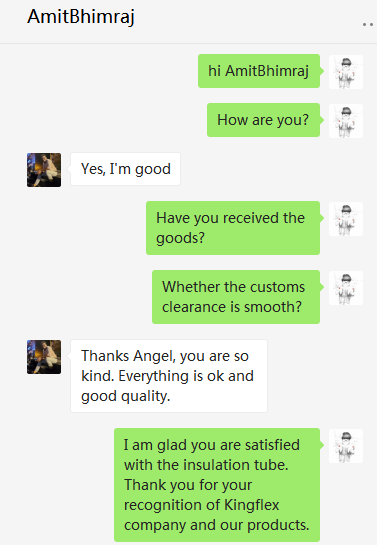
Verified communication records and testing approval from global contracting engineers.



Direct B2B supply lines for insulation fabricators and global procurement projects.

Environmental standards and safety regulations, such as European Union emission goals and the US ASTM fire safety codes, continue to demand higher performance from thermal insulation materials. Historically, insulation cores and protective outer claddings were installed as separate steps. The industry is currently shifting toward integrated composite systems, where aluminum protective layers are pre-bonded to elastomeric substrates at the factory.
Kingflex is active in this area, developing automated composite bonding processes that reduce installation steps and help eliminate the risk of internal condensation between layers. Additionally, we are evaluating alternative, non-halogenated flame retardants to improve environmental compliance while maintaining required fire safety performance (such as BS 476 Class 0 and UL94 V-0 standards).
B2B technical specifications, system integration details, and factory support policies.